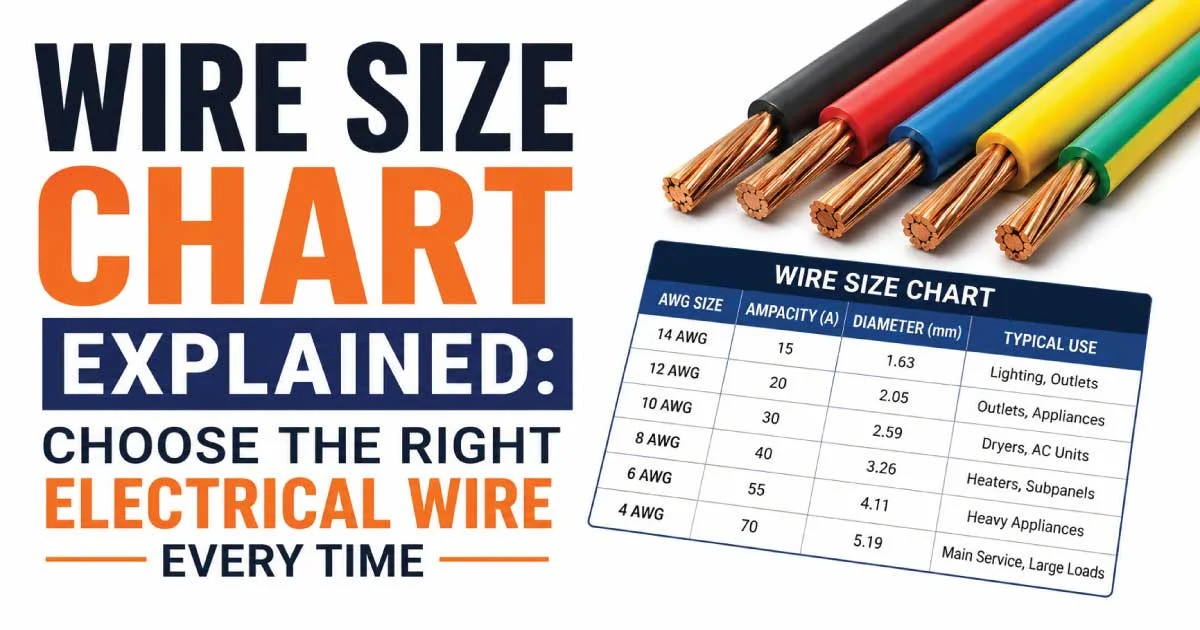
A wire size chart is an essential reference used by electricians, engineers, contractors, and DIY enthusiasts to select the correct electrical wire for different applications. It provides standardized wire measurements, current-carrying capacity, resistance, and recommended usage.
Choose the correct wire size ensures electrical safety, minimizes voltage drop, improves system efficiency, and prevents overheating that could damage equipment or cause electrical fires in residential, commercial, and industrial installations.
What Is a Wire Size Chart?
A wire size chart is a reference table that lists wire gauges alongside their physical diameter, cross-sectional area, ampacity, and resistance values. These charts simplify wire selection by helping users determine the appropriate conductor size based on electrical load, installation environment, and distance. Whether using American Wire Gauge (AWG) or metric measurements, the chart serves as a reliable guide for safe electrical design.
Key Information Found in a Wire Size Chart
Most wire size charts include several technical specifications that help professionals make informed decisions. Common information includes:
- Wire gauge (AWG or metric)
- Diameter of the conductor
- Cross-sectional area
- Maximum current capacity (ampacity)
- Electrical resistance
- Voltage drop values
- Recommended applications
- Material type (Copper or Aluminum)
Understanding these details helps users select the correct conductor for optimal performance.
Why Wire Size Matters in Electrical Systems
Wire size directly affects the safety and efficiency of any electrical installation. A wire that is too small for the electrical load can overheat, melt insulation, trip circuit breakers, or even start a fire. Conversely, oversized wires increase project costs without always providing additional benefits. Selecting the correct wire size ensures reliable power delivery while maintaining compliance with electrical safety standards and regulations.
Understand The American Wire Gauge (AWG)
American Wire Gauge (AWG) is the most widely used wire measurement system in North America. Unlike many measurement systems, the AWG scale works inversely—smaller gauge numbers represent thicker wires, while larger numbers indicate thinner conductors. Each gauge has a standardized diameter, resistance, and ampacity, making electrical calculations more accurate and consistent across various applications.
Common AWG Wire Sizes and Their Uses
The following AWG sizes are frequently used in residential and commercial wiring projects:
- 22 AWG: Low-voltage electronics and signal wiring
- 20 AWG: Security systems and small control circuits
- 18 AWG: Doorbells and thermostats
- 16 AWG: Light-duty extension cords
- 14 AWG: Residential lighting circuits
- 12 AWG: Standard household outlets
- 10 AWG: Water heaters and air conditioners
- 8 AWG: Electric ranges and subpanels
- 6 AWG: Large appliances and EV chargers
- 4 AWG and larger: Industrial equipment and service entrances
Metric Wire Sizes Explained
Many countries use metric wire sizing instead of AWG. Metric wire sizes are expressed in square millimeters (mm²), representing the conductor’s cross-sectional area. Larger square millimeter values indicate thicker wires capable of carrying higher electrical currents. Metric sizing is commonly used throughout Europe, Asia, Australia, and many international electrical standards.
Popular Metric Wire Sizes
Some of the most commonly used metric wire sizes include:
- 0.5 mm²
- 0.75 mm²
- 1.0 mm²
- 1.5 mm²
- 2.5 mm²
- 4 mm²
- 6 mm²
- 10 mm²
- 16 mm²
- 25 mm²
- 35 mm²
- 50 mm²
Each size corresponds to specific current ratings depending on insulation type and installation conditions.
Copper vs. Aluminum Wire Sizes
Wire size charts often distinguish between copper and aluminum conductors because these materials have different electrical properties. Copper has higher electrical conductivity and lower resistance, allowing smaller wire sizes to carry the same current as larger aluminum conductors. Aluminum is lighter and less expensive but generally requires larger wire sizes to achieve comparable electrical performance.
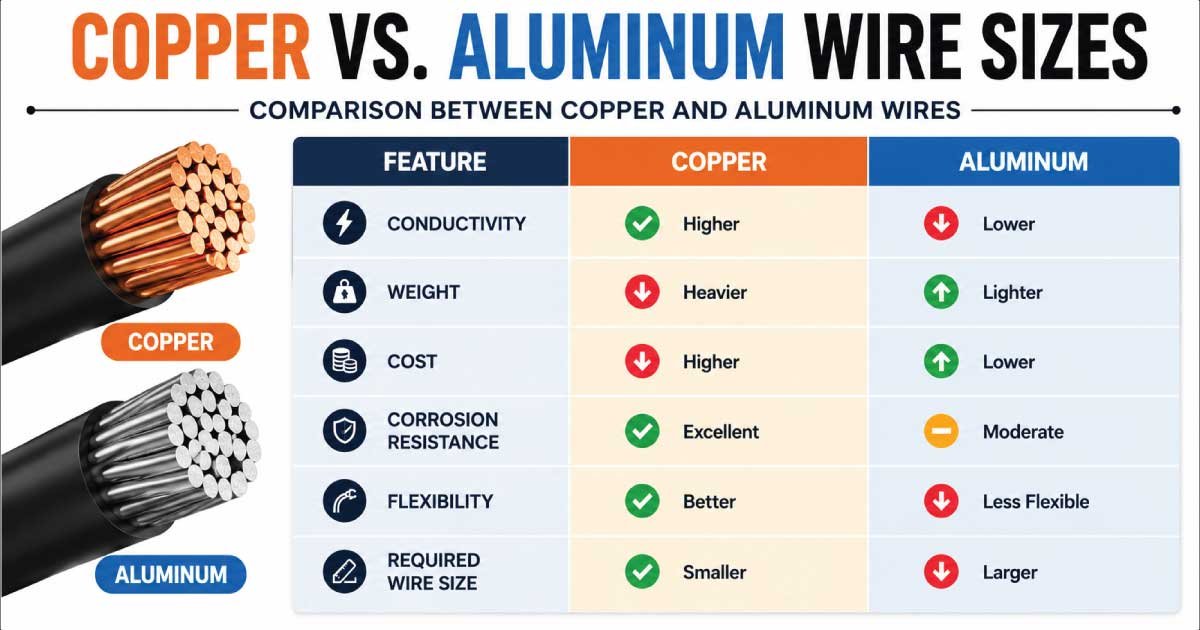
Comparison Between Copper and Aluminum Wires
| Feature | Copper | Aluminum |
|---|---|---|
| Conductivity | Higher | Lower |
| Weight | Heavier | Lighter |
| Cost | Higher | Lower |
| Corrosion Resistance | Excellent | Moderate |
| Flexibility | Better | Less Flexible |
| Required Wire Size | Smaller | Larger |
Wire Size Chart PDF
Copper and aluminum wires are the two most common conductors used in electrical systems, each offering unique advantages. Copper provides higher conductivity, better flexibility, and superior corrosion resistance, while aluminum is lighter, more affordable, and suitable for larger installations. This comparison chart helps you quickly understand the key differences and choose the right wire for your project.
How to Read a Wire Size
Reading a wire size involves matching your electrical requirements with the appropriate conductor specifications. Start by identifying the required current, then consider the wire material, installation length, voltage, insulation type, and ambient temperature. Finally, choose the wire gauge that safely supports the calculated load while maintaining acceptable voltage drop and meeting applicable electrical codes.
Steps to Read a Wire Size
Follow these simple steps:
- Determine the electrical load in amperes.
- Measure the cable run length.
- Identify system voltage.
- Choose copper or aluminum conductor.
- Check environmental temperature.
- Find the matching wire gauge.
- Verify voltage drop limits.
- Confirm compliance with local electrical codes.
Understanding Ampacity in Wire Size Charts
Ampacity refers to the maximum amount of electrical current a wire can safely carry without exceeding its temperature rating. Wire size charts provide ampacity values based on conductor material, insulation type, and installation conditions. Using a wire beyond its rated ampacity can result in overheating, insulation failure, equipment damage, and serious fire hazards.
Factors That Affect Ampacity
Several variables influence a wire’s ampacity, including:
- Conductor material
- Wire gauge
- Insulation rating
- Ambient temperature
- Number of bundled conductors
- Installation method
- Ventilation
- Electrical load duration
Understanding these factors helps ensure accurate wire selection.
Wire Diameter and Cross-Sectional Area
Although wire gauge is commonly used to identify conductor size, diameter and cross-sectional area provide a more precise understanding of wire capacity. As wire diameter increases, resistance decreases and current-carrying capability improves. Cross-sectional area, typically measured in square millimeters or circular mils, is especially useful when comparing metric and AWG wire sizing systems.
Importance of Voltage Drop in Wire Selection
Voltage drop occurs when electrical energy is lost as current travels through a conductor. Longer wire runs and smaller wire sizes increase resistance, leading to greater voltage drop. Wire size charts help electricians select conductors that maintain acceptable voltage levels, ensuring electrical equipment operates efficiently and safely without reduced performance or unnecessary power loss.
Common Causes of Voltage Drop
Voltage drop can increase because of several factors:
- Long cable distances
- Undersized wires
- High electrical loads
- Poor electrical connections
- Elevated operating temperatures
- Low-quality conductors