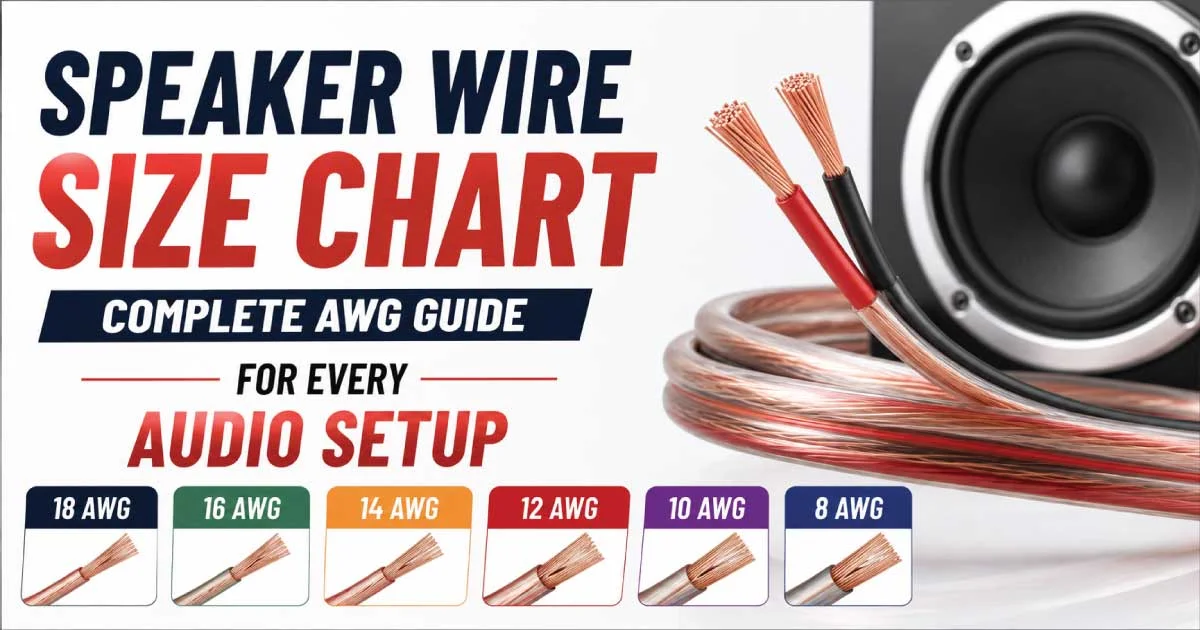
Choosing the correct speaker wire size is one of the most overlooked yet essential aspects of building a high-quality audio system. Whether you’re installing a home theater, upgrading your car audio, or setting up professional sound equipment, the right wire gauge ensures efficient power transfer, better sound quality, and long-term reliability.
Many people assume that all speaker wires are the same, but wire thickness significantly affects resistance and audio performance. This guide explains everything you need to know about speaker wire sizes, gauges, and selection methods.
You will learn how wire length, speaker impedance, and amplifier power influence your decision. By understanding these fundamentals, you’ll be able to choose the ideal speaker wire for your setup without overspending or sacrificing sound quality.
Why Speaker Wire Size Matters
The thickness of speaker wire directly impacts electrical resistance. Thinner wires create higher resistance, reducing the amount of power reaching your speakers. This can result in lower volume, weaker bass, and diminished overall sound quality, especially when using long cable runs or high-powered audio equipment.
Using the proper gauge minimizes energy loss while preserving audio clarity. It also prevents unnecessary strain on amplifiers, allowing your entire system to operate more efficiently. Selecting the correct wire size is one of the simplest ways to improve both performance and reliability.
Understanding Speaker Wire Gauge (AWG)
Speaker wire sizes are measured using the American Wire Gauge (AWG) system. Interestingly, the lower the AWG number, the thicker the wire. A thicker wire has less electrical resistance, making it better suited for longer cable runs and higher-power audio systems where efficient signal transmission is critical.
Common speaker wire gauges include:
- 12 AWG – Thickest standard speaker wire
- 14 AWG – Excellent for medium and long distances
- 16 AWG – Suitable for most home audio systems
- 18 AWG – Best for short cable runs and low-power speakers
Understanding this numbering system helps you quickly identify which wire is appropriate for your installation.
How Speaker Wire Works
Speaker wire carries electrical signals from the amplifier to the speakers. These signals power the speaker drivers, allowing them to produce sound. The wire itself doesn’t improve sound quality, but choosing the wrong size can reduce efficiency through increased electrical resistance and power loss.
A properly sized speaker wire allows the amplifier to deliver sufficient current without significant voltage drop. This ensures speakers perform as intended, producing cleaner highs, fuller mids, and deeper bass throughout the listening experience.
Factors That Determine Speaker Wire Size
Several factors influence the ideal speaker wire gauge. Considering these variables ensures optimal performance and avoids unnecessary expenses on oversized cables.
Important Factors Include:
- Wire length
- Speaker impedance
- Amplifier power output
- Installation environment
- Future upgrade plans
Each factor contributes to determining the minimum gauge needed for efficient signal transmission.
Speaker Wire Size Chart
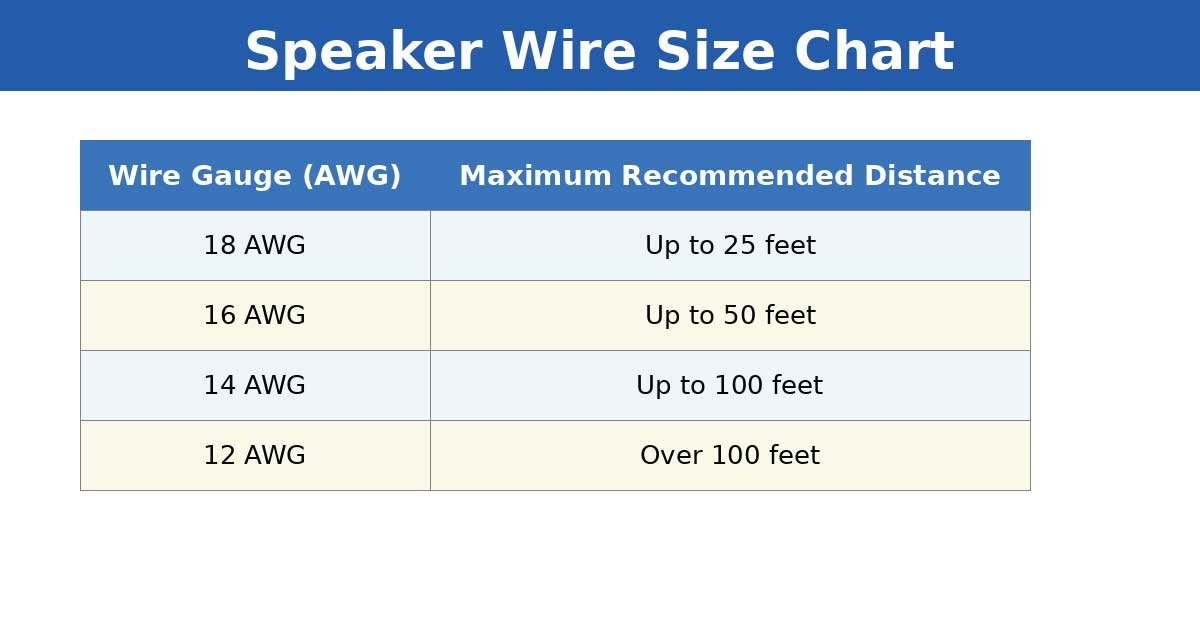
The following chart provides general recommendations for selecting speaker wire based on cable length.
Speaker Wire Size Chart PDF
| Wire Gauge (AWG) | Maximum Recommended Distance |
|---|---|
| 18 AWG | Up to 25 feet |
| 16 AWG | Up to 50 feet |
| 14 AWG | Up to 100 feet |
| 12 AWG | Over 100 feet |
Choosing the correct speaker wire gauge helps maintain audio quality and reduce signal loss over different cable lengths. Thicker wire is recommended for longer distances because it offers lower electrical resistance. This speaker wire size chart provides a quick reference to help you select the appropriate AWG size for reliable performance and clear sound.
These recommendations apply to most residential audio installations using standard 8-ohm speakers.
Speaker Wire Size for 4-Ohm Speakers
Four-ohm speakers draw more electrical current than 8-ohm speakers. Because of this increased current flow, they require thicker wires to minimize resistance and prevent excessive power loss. Using undersized wire with low-impedance speakers may reduce amplifier efficiency and negatively affect sound quality.
Recommended wire sizes include:
- Up to 25 feet – 16 AWG
- 25–50 feet – 14 AWG
- Over 50 feet – 12 AWG
Speaker Wire Size for 8-Ohm Speakers
Eight-ohm speakers are the most common choice in home audio systems. They draw less current than 4-ohm speakers, making them more forgiving when selecting wire gauge. Most home installations perform exceptionally well using 16 AWG speaker wire unless exceptionally long cable runs are involved.
Typical recommendations are:
- Up to 50 feet – 16 AWG
- 50–100 feet – 14 AWG
- Over 100 feet – 12 AWG
How Distance Affects Speaker Wire Selection
Wire length is one of the biggest factors influencing gauge selection. Every foot of cable adds electrical resistance, which reduces power delivered to the speaker. Longer runs require thicker wires to maintain efficiency and preserve audio quality throughout the entire installation.
For example:
- Short distances require thinner wire.
- Medium distances benefit from 16 or 14 AWG.
- Long distances often require 12 AWG.
Ignoring cable length can lead to noticeable performance loss, particularly with powerful amplifiers.
The Relationship Between Resistance and Performance
Electrical resistance opposes current flow. As resistance increases, less power reaches the speakers. Higher resistance also causes the amplifier to work harder, potentially increasing heat generation and reducing overall system efficiency.
Lower resistance provides several benefits:
- Better amplifier efficiency
- Cleaner sound reproduction
- Improved bass response
- Higher maximum output
- Reduced signal loss
Choosing thicker wire is the easiest way to reduce resistance.
Solid vs. Stranded Speaker Wire
Speaker wire is generally available in two construction types: solid and stranded. While both transmit electrical signals effectively, stranded wire is far more common because of its flexibility and ease of installation.
Solid Wire
- Single conductor
- Lower manufacturing cost
- More difficult to bend
- Better suited for permanent installations
Stranded Wire
- Multiple small conductors
- Flexible and durable
- Easier to route around obstacles
- Preferred for most home and automotive audio systems
Most installers recommend stranded wire because it simplifies installation without sacrificing performance.
Copper vs. Copper-Clad Aluminum Speaker Wire
The material used in speaker wire significantly affects conductivity and durability. Pure copper offers superior performance, while copper-clad aluminum provides a more affordable alternative.
Pure Copper Wire
- Excellent conductivity
- Lower resistance
- Longer lifespan
- Better overall performance
Copper-Clad Aluminum (CCA)
- Lower cost
- Lighter weight
- Higher resistance
- Requires thicker gauge for equivalent performance
Pure oxygen-free copper remains the preferred option for high-performance audio systems.
Can Speaker Wire Be Too Thick?
Using a wire thicker than necessary generally does not harm your audio system. The primary disadvantages are increased cost, reduced flexibility, and more challenging installation. While oversized wire doesn’t improve sound beyond reducing resistance, it can provide room for future equipment upgrades.
Many enthusiasts choose 14 AWG instead of 16 AWG because it offers additional capacity with minimal price difference, making it a practical long-term investment.
Common Speaker Wire Mistakes
Many installation problems stem from simple wiring mistakes rather than poor equipment. Avoiding these errors improves both safety and audio performance.
Common mistakes include:
- Choosing wire that is too thin
- Ignoring cable length
- Mixing wire gauges unnecessarily
- Reversing speaker polarity
- Using damaged or corroded wire
- Leaving exposed conductors uncovered
Proper installation ensures reliable operation and consistent sound quality for years.
Choosing the Right Speaker Wire for Home Theater Systems
Home theater installations often involve multiple speakers positioned throughout a room. Since cable lengths vary between front, center, surround, and subwoofer channels, selecting the proper wire gauge becomes especially important. Matching wire thickness to cable distance helps maintain balanced sound and consistent performance across every speaker in the system.
Choosing the Right Speaker Wire for Car Audio Systems
Car audio installations present unique challenges because wires must pass through tight spaces, vehicle panels, and areas exposed to vibration. Although most cable runs are relatively short, selecting durable stranded copper wire ensures flexibility, long-lasting reliability, and efficient power delivery between amplifiers and speakers without unnecessary signal loss.
Recommended wire gauges for car audio include:
- 18 AWG – Factory replacement speakers
- 16 AWG – Standard aftermarket speakers
- 14 AWG – High-power component speakers
- 12 AWG – Powerful subwoofer systems
Speaker Wire for Outdoor Speakers
Outdoor speakers require wiring that can withstand moisture, sunlight, and temperature changes while maintaining reliable electrical performance. Standard indoor speaker wire may deteriorate over time when exposed to harsh environmental conditions. Weather-resistant cables with UV protection and durable insulation provide significantly better longevity and dependable operation.
For outdoor installations, look for:
- UV-resistant insulation
- Waterproof or direct-burial ratings
- Oxygen-free copper conductors
- Durable outer jackets
- Corrosion-resistant construction
Speaker Wire Size for Subwoofers
Subwoofers consume considerably more power than standard speakers because they reproduce low-frequency sounds requiring greater amplifier output. Using thicker wire minimizes resistance and allows maximum current flow, helping produce tighter bass response and preventing unnecessary strain on the amplifier during demanding listening sessions.
General recommendations include:
- Up to 20 feet – 14 AWG
- 20–50 feet – 12 AWG
- High-power systems – 10 or 12 AWG
How to Measure Speaker Wire Length
Accurate cable measurements prevent wasted materials and ensure the selected wire gauge matches the installation distance. Rather than measuring in a straight line, follow the actual routing path the cable will take through walls, ceilings, or furniture while allowing extra length for clean connections.
Helpful measuring tips include:
- Measure the full cable route
- Add 10–15% extra length
- Avoid overly tight bends
- Keep wiring organized
- Label both wire ends
Understanding Speaker Wire Polarity
Every speaker wire contains positive and negative conductors. Maintaining consistent polarity throughout the system ensures all speakers move in the same direction simultaneously. Incorrect polarity can reduce bass response, weaken stereo imaging, and create an unnatural listening experience despite properly functioning equipment.
Most speaker wires identify polarity using:
- Colored insulation
- Printed markings
- Stripes or ridges
- Different conductor colors
Always connect positive terminals to positive terminals and negative terminals to negative terminals.
Does Expensive Speaker Wire Improve Sound Quality?
Premium speaker wire often features better insulation, higher-quality copper, and improved durability. However, once an appropriately sized copper wire is used, spending significantly more money rarely produces dramatic improvements in audible sound quality for typical home listening environments.
Instead of focusing solely on expensive cables, prioritize:
- Correct wire gauge
- Pure copper conductors
- Reliable connectors
- Proper installation
- Secure amplifier and speaker connections
These factors usually have a much greater impact on performance.
Speaker Wire Connectors and Terminations
While bare wire connections work well, connectors make installations cleaner, safer, and easier to maintain. They also reduce the likelihood of loose strands causing short circuits or poor electrical contact over time.
Popular connector options include:
- Banana plugs
- Spade connectors
- Pin connectors
- Bare wire terminals
Choosing quality connectors simplifies future equipment upgrades and maintenance.
How to Strip Speaker Wire Correctly
Proper wire stripping ensures maximum electrical contact without damaging the copper strands. Removing too much insulation leaves exposed conductors, while cutting into the strands weakens the connection and increases electrical resistance.
Follow these basic steps:
- Measure the required strip length.
- Use a proper wire stripper.
- Remove approximately half an inch of insulation.
- Twist stranded wire tightly.
- Insert securely into the terminal.
A clean connection improves both reliability and audio performance.
Can You Extend Speaker Wire?
Yes, speaker wire can be extended safely if the connection is made correctly. High-quality splices maintain conductivity while preventing signal interruptions. Poorly connected extensions may introduce additional resistance or intermittent performance issues over time.
Best methods for extending speaker wire include:
- Soldered joints
- Crimp connectors
- Terminal blocks
- Heat-shrink tubing for insulation
Whenever possible, use a single continuous cable for the best results.
Signs You are Using the Wrong Speaker Wire Size
Incorrect speaker wire gauge doesn’t always cause immediate problems, but certain symptoms can indicate excessive resistance or poor power delivery. Recognizing these warning signs allows you to correct the issue before it affects long-term equipment performance.
Common signs include:
- Weak bass output
- Reduced overall volume
- Amplifier overheating
- Distorted sound at high volume
- Uneven speaker performance
Upgrading to a thicker gauge often resolves these issues.
Tips for Installing Speaker Wire
A well-planned installation protects cables while improving the appearance and reliability of your audio system. Organizing wire runs also simplifies troubleshooting and future upgrades if additional speakers or equipment are added later.
Installation best practices include:
- Avoid running wires near power cables
- Secure cables with clips or ties
- Prevent sharp bends
- Protect wires passing through walls
- Leave service loops for maintenance
Neat installations are safer and easier to service.