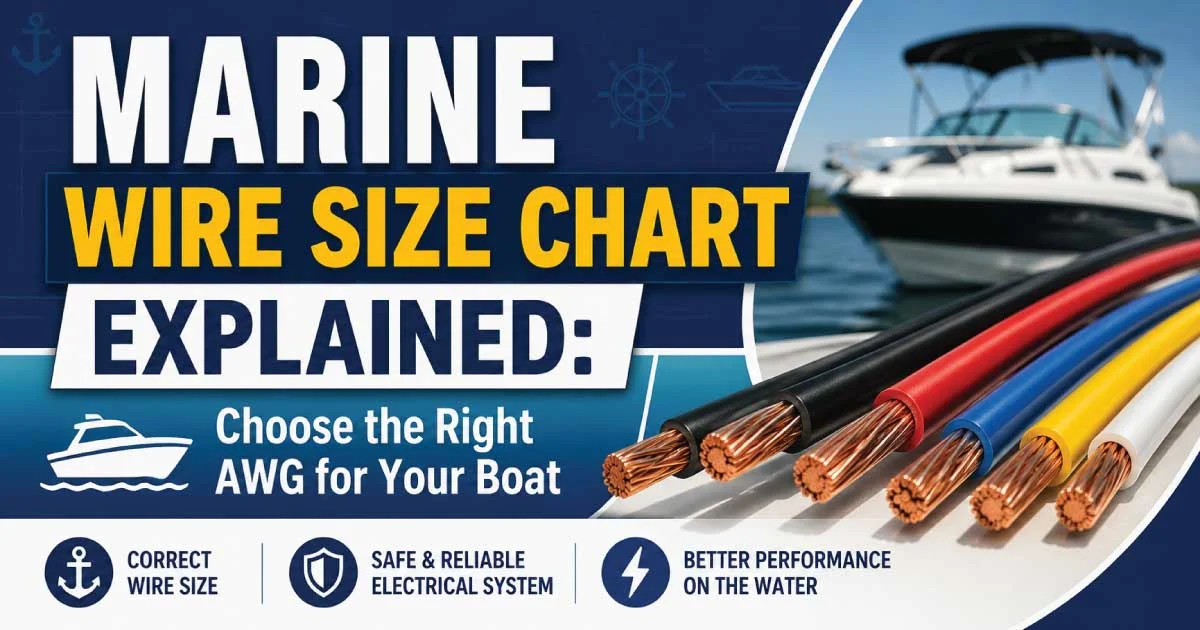
Marine Wire Size Chart: Choose the Right AWG Size

Choosing the correct marine wire size is one of the most important decisions when designing or upgrading a boat’s electrical system. Marine-grade wiring is responsible for delivering power safely to navigation equipment, lighting, pumps, batteries, electronics, and engines.

Using the wrong wire gauge can lead to voltage drop, overheating, equipment failure, and even electrical fires. A marine wire size chart helps boat owners, electricians, and DIY enthusiasts determine the correct wire gauge based on current, cable length, and voltage requirements.

Understanding how these charts work ensures reliable performance, longer equipment life, and compliance with marine safety standards while reducing maintenance costs.


What Is a Marine Wire Size Chart?

A marine wire size chart is a reference guide that helps determine the proper wire gauge for electrical circuits installed on boats and marine vessels. It matches wire sizes with amperage, voltage, and cable length to minimize voltage loss while maintaining safe operating temperatures for electrical equipment in harsh marine environments.

Key Information Found in a Marine Wire Size Chart

Every marine wire size chart contains essential specifications that simplify wire selection for different electrical applications.

  • American Wire Gauge (AWG)
  • Maximum amperage capacity
  • Wire resistance
  • Recommended circuit length
  • Voltage drop percentage
  • Recommended marine applications
  • Insulation rating
  • Copper conductor specifications

These details help installers choose wiring that delivers sufficient power while meeting marine electrical standards.


Why Wire Size Matters in Marine Electrical Systems

Marine electrical systems face constant exposure to moisture, vibration, heat, and corrosion, making proper wire sizing even more important than in household wiring. Correctly sized wires reduce resistance, improve efficiency, and prevent dangerous overheating that could damage expensive onboard electronics or create fire hazards during operation.

Benefits of Using the Correct Marine Wire Size

Selecting the proper wire gauge provides several performance and safety advantages for any boat.

  • Reduces voltage drop
  • Prevents overheating
  • Improves battery efficiency
  • Increases equipment lifespan
  • Supports reliable engine starting
  • Minimizes electrical losses
  • Enhances onboard safety
  • Meets marine electrical standards

Correct wire sizing also simplifies future maintenance and upgrades.


Understanding American Wire Gauge (AWG)

American Wire Gauge, commonly known as AWG, is the standard measurement used to identify wire diameter in North America. A smaller AWG number indicates a thicker wire capable of carrying more current, while larger AWG numbers represent thinner wires designed for lighter electrical loads and shorter cable runs.

Common Marine AWG Sizes

Different marine applications require different wire gauges depending on electrical demand.
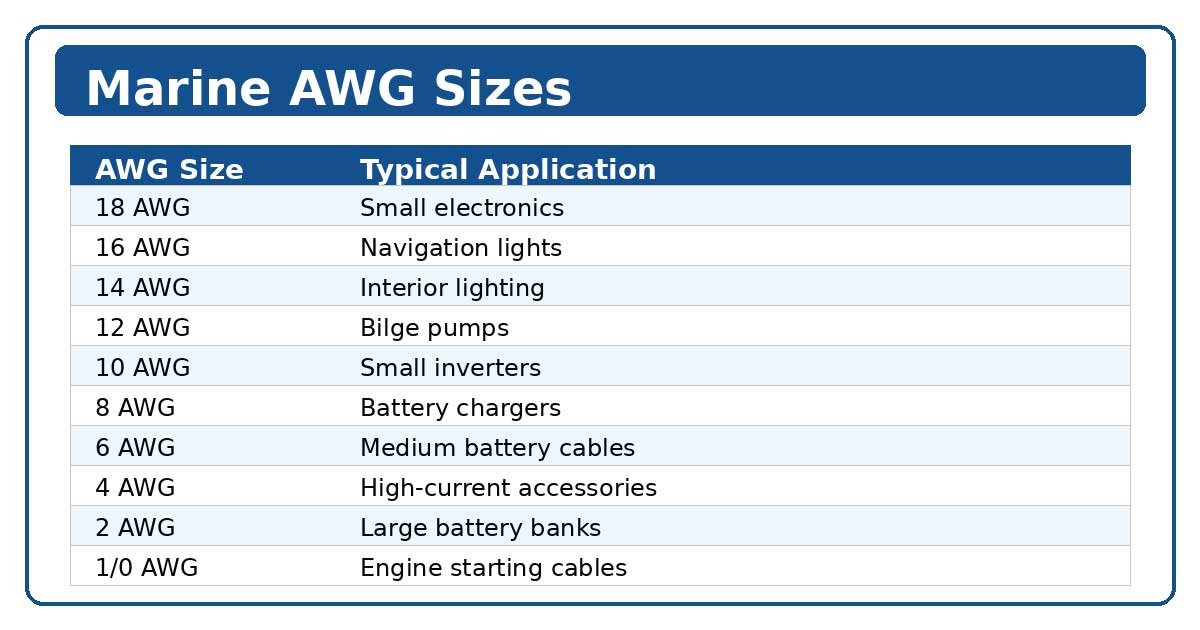
Marine AWG Sizes

AWG Size Typical Application
18 AWG Small electronics
16 AWG Navigation lights
14 AWG Interior lighting
12 AWG Bilge pumps
10 AWG Small inverters
8 AWG Battery chargers
6 AWG Medium battery cables
4 AWG High-current accessories
2 AWG Large battery banks
1/0 AWG Engine starting cables

Marine AWG Sizes PDF

Marine AWG wire sizes help ensure safe, reliable electrical performance in boats and marine equipment. Choosing the correct wire gauge reduces voltage drop, prevents overheating, and supports dependable operation in harsh marine environments. This Marine AWG Sizes chart provides a quick reference for common wire gauges and their typical applications, from navigation lights to engine starting cables.

Marine_AWG_Sizes_Chart

Choosing the appropriate AWG minimizes power loss and protects connected equipment.


Factors That Determine Marine Wire Size

Wire size selection involves more than simply matching amperage ratings. Multiple factors influence the ideal wire gauge, ensuring reliable operation under varying marine conditions. Understanding these variables helps prevent under-sizing or unnecessary oversizing while maintaining electrical efficiency throughout the vessel.

Electrical Current (Amperage)

Current draw is one of the primary factors when choosing marine wire. Higher amperage requires thicker conductors because larger wires carry more electrical current without excessive heat buildup or voltage loss. Every electrical device has a rated current that should be considered before selecting cable size.

Cable Length

Longer wire runs increase electrical resistance, causing greater voltage drop. As cable length increases, larger wire sizes become necessary to maintain proper voltage at the electrical device. Marine wire charts account for total circuit length, including both positive and negative conductors.

System Voltage

Marine electrical systems commonly operate on 12V, 24V, or 48V configurations. Lower-voltage systems experience greater voltage drop than higher-voltage systems, requiring larger wire sizes. Most recreational boats use 12-volt systems, making wire sizing especially important for efficient power delivery.

Voltage Drop Requirements

Voltage drop represents the amount of voltage lost while electricity travels through the wire. Most marine installations recommend limiting voltage drop to:

  • 3% for critical equipment
  • 10% for non-critical accessories

Maintaining acceptable voltage levels improves equipment performance and reliability.


Marine Wire Size Chart for 12-Volt Systems

Since most recreational boats operate on 12-volt electrical systems, this wire size chart provides general recommendations for common applications. Always verify manufacturer requirements before installation.

Amps 10 ft 20 ft 30 ft 40 ft
5 18 AWG 16 AWG 16 AWG 14 AWG
10 16 AWG 14 AWG 12 AWG 10 AWG
15 14 AWG 12 AWG 10 AWG 8 AWG
20 12 AWG 10 AWG 8 AWG 6 AWG
30 10 AWG 8 AWG 6 AWG 4 AWG
40 8 AWG 6 AWG 4 AWG 2 AWG

This chart serves as a practical reference for many standard marine electrical installations.


Marine Wire Size Chart for 24-Volt Systems

Twenty-four-volt systems experience lower voltage drop compared to 12-volt systems, allowing slightly smaller wire sizes for similar electrical loads. These systems are common in larger boats, commercial vessels, and high-powered marine equipment requiring improved electrical efficiency.

Amps 10 ft 20 ft 30 ft 40 ft
10 18 AWG 16 AWG 16 AWG 14 AWG
20 16 AWG 14 AWG 12 AWG 10 AWG
30 14 AWG 12 AWG 10 AWG 8 AWG
40 12 AWG 10 AWG 8 AWG 6 AWG
50 10 AWG 8 AWG 6 AWG 4 AWG

Always calculate wire size based on total circuit length rather than one-way distance.


Difference Between Marine Wire and Automotive Wire

Although marine and automotive wires may appear similar, they are designed for different operating conditions. Marine wire uses tinned copper strands and superior insulation to resist corrosion, moisture, saltwater exposure, UV radiation, vibration, and continuous movement found in marine environments.

Marine Wire Advantages

Marine-grade wiring offers significant benefits over standard automotive wire.

  • Tinned copper conductors
  • Corrosion resistance
  • Flexible stranded construction
  • UV-resistant insulation
  • Moisture protection
  • Longer service life
  • Improved conductivity
  • Better vibration resistance

Using marine-grade wire enhances reliability and reduces maintenance in demanding boating environments.


Choosing Marine Wire Insulation

Insulation quality is just as important as conductor size because marine cables operate in harsh environmental conditions. High-quality insulation protects against water intrusion, chemicals, abrasion, sunlight, and engine heat while maintaining flexibility during years of continuous boat operation.

Common Marine Wire Insulation Types

Several insulation materials are commonly used in marine electrical wiring.

  • PVC insulation
  • Cross-linked polyethylene (XLPE)
  • Thermoplastic insulation
  • Flame-retardant coatings
  • Oil-resistant jackets

Selecting suitable insulation ensures long-term protection and dependable electrical performance.


Common Applications for Different Marine Wire Sizes

Each wire gauge is designed for specific electrical loads commonly found on boats. Matching wire size with equipment demand ensures efficient operation and reduces unnecessary voltage losses across the electrical system.

Typical Marine Equipment by Wire Gauge

Below are common examples of marine equipment matched with appropriate wire sizes.

  • 18 AWG: GPS antennas, sensors
  • 16 AWG: LED navigation lights
  • 14 AWG: Cabin lighting
  • 12 AWG: Bilge pumps
  • 10 AWG: Fish finders, radios
  • 8 AWG: Battery chargers
  • 6 AWG: Windlasses
  • 4 AWG: Inverters
  • 2 AWG: Battery banks
  • 1/0 AWG: Starter motors

Selecting the correct wire gauge ensures dependable electrical performance throughout the vessel.

Marine Wire Ampacity Chart

Ampacity refers to the maximum amount of electrical current a wire can safely carry without overheating. Marine wire ampacity depends on conductor size, insulation rating, installation conditions, and ambient temperature. While ampacity is important, marine wire selection should always consider voltage drop in addition to current-carrying capacity.

AWG Size Approximate Ampacity
18 AWG 14 Amps
16 AWG 18 Amps
14 AWG 25 Amps
12 AWG 30 Amps
10 AWG 40 Amps
8 AWG 55 Amps
6 AWG 75 Amps
4 AWG 95 Amps
2 AWG 130 Amps
1/0 AWG 170 Amps

These values are general references. Always verify equipment specifications and applicable marine electrical standards before installation.


Understanding Voltage Drop in Marine Wiring

Voltage drop occurs when electrical energy is lost as current travels through a conductor. Excessive voltage drop reduces equipment efficiency, causes motors to run hotter, dims lights, and shortens battery life. Proper wire sizing minimizes these losses and ensures consistent power delivery throughout the vessel.

Recommended Voltage Drop Limits

Marine electrical systems generally follow these recommended voltage-drop limits.

  • 3% maximum for:
    • Navigation lights
    • Bilge pumps
    • Electronics
    • Engine controls
    • Communication equipment
  • 10% maximum for:
    • Cabin lighting
    • Fans
    • General accessories
    • Non-critical loads

Following these recommendations improves both safety and equipment reliability.


How to Calculate Marine Wire Size

Choosing the proper marine wire requires evaluating several electrical factors instead of relying solely on amperage. Accurate calculations reduce installation problems and help maintain efficient system performance over long cable runs.

Step-by-Step Wire Size Selection

Use the following process when selecting marine wire.

  1. Determine the equipment’s current draw.
  2. Measure the total circuit length.
  3. Identify the system voltage.
  4. Select the acceptable voltage-drop percentage.
  5. Refer to a marine wire size chart.
  6. Choose the next larger wire size if uncertain.

Following these steps provides a safe margin for future upgrades and demanding operating conditions.


Importance of Tinned Copper Marine Wire

Marine environments expose electrical wiring to moisture, saltwater, vibration, and temperature changes every day. Tinned copper conductors provide superior protection against corrosion compared to bare copper, making them the preferred choice for nearly all marine electrical installations.

Advantages of Tinned Copper Wire

Tinned marine wire offers several important benefits.

  • Excellent corrosion resistance
  • Longer service life
  • Improved electrical conductivity
  • Better flexibility
  • Easier maintenance
  • Greater reliability
  • Reduced oxidation
  • Enhanced durability in saltwater

Although slightly more expensive, tinned copper wire significantly reduces long-term maintenance costs.


Marine Wire Color Codes

Color coding simplifies installation, troubleshooting, and future maintenance by allowing technicians to quickly identify each circuit. Following standardized wire colors also improves safety during repairs and system upgrades.

Common Marine Wire Colors

The following colors are commonly used in marine electrical systems.

Wire Color Typical Function
Red Positive battery
Black DC negative
Yellow DC negative (modern standard)
Green Bonding/ground
Blue Cabin lights
Brown Pumps
Orange Accessories
Purple Ignition
Gray Navigation lights
White General circuits

Always label wires clearly, especially when modifying older boats.


Common Mistakes When Choosing Marine Wire Size

Incorrect wire sizing remains one of the leading causes of electrical issues on boats. Many installation problems result from overlooking voltage drop, using household wire, or selecting cable based only on current ratings without considering circuit length.

Mistakes to Avoid

Avoid these common wiring errors.

  • Choosing wire based only on amperage
  • Ignoring cable length
  • Using automotive wire
  • Installing undersized cables
  • Skipping circuit protection
  • Mixing different wire grades
  • Ignoring corrosion protection
  • Using poor-quality connectors

Avoiding these mistakes improves system reliability and reduces maintenance expenses.


Marine Wire Installation Best Practices

Proper installation is just as important as selecting the correct wire size. High-quality materials combined with careful routing and secure connections produce dependable electrical systems capable of handling harsh marine conditions for many years.

Installation Tips

Follow these recommended installation practices.

  • Use marine-grade wire only.
  • Support cables regularly with clamps.
  • Protect wires from sharp edges.
  • Seal all electrical connections.
  • Use heat-shrink connectors.
  • Install appropriate circuit breakers.
  • Keep wiring organized.
  • Label every circuit clearly.

Professional installation practices reduce troubleshooting time and improve long-term safety.


How Temperature Affects Marine Wire Performance

Wire resistance increases as temperature rises, reducing current-carrying efficiency and increasing voltage drop. Engine compartments, battery rooms, and enclosed electrical spaces often experience elevated temperatures that require careful consideration during wire selection.

High-Temperature Considerations

When wiring high-temperature areas, remember to:

  • Choose higher temperature-rated insulation.
  • Increase wire size if necessary.
  • Allow proper ventilation.
  • Avoid routing near exhaust components.
  • Inspect insulation regularly.
  • Replace damaged cables immediately.

Considering temperature improves both safety and equipment longevity.


When Should You Upgrade Marine Wiring?

Older boats often contain wiring that no longer meets current electrical demands. Adding modern electronics, larger batteries, inverters, or electric trolling motors may require upgrading existing wiring to safely carry increased current without excessive voltage loss.

Signs Your Wiring Needs Replacement

Watch for these warning signs.

  • Flickering lights
  • Warm or hot cables
  • Frequent blown fuses
  • Corroded wire strands
  • Cracked insulation
  • Battery charging problems
  • Voltage fluctuations
  • Burning electrical smell

Addressing these issues early helps prevent expensive repairs and electrical failures.


Marine Wire Maintenance Tips

Routine inspections help identify problems before they become serious. Regular maintenance extends wire life, improves electrical efficiency, and reduces unexpected failures while on the water.

Maintenance Checklist

Inspect your marine wiring regularly by following these recommendations.

  • Check terminals for corrosion.
  • Tighten loose connections.
  • Inspect insulation damage.
  • Clean battery terminals.
  • Replace worn connectors.
  • Test voltage periodically.
  • Secure loose wiring.
  • Keep wiring dry whenever possible.

Preventive maintenance protects both equipment and passengers.


Final Thoughts

Selecting the correct marine wire size is essential for building a safe, efficient, and dependable boat electrical system. A marine wire size chart simplifies the selection process by matching the appropriate wire gauge to the required amperage, voltage, and cable length, helping ensure optimal electrical performance.

Using the correct marine wire size minimizes voltage drop, improves power delivery, and reduces the risk of overheating or electrical failures. Proper wire sizing also enhances the reliability of onboard equipment while extending the lifespan of the entire electrical system in harsh marine conditions.

For the best results, combine accurate wire sizing with marine-grade tinned copper conductors, high-quality insulation, proper circuit protection, and professional installation practices. These components work together to resist corrosion, maintain electrical efficiency, and provide dependable performance in demanding marine environments.

Regular inspections and preventive maintenance further improve the safety and longevity of your boat’s electrical system. By following a trusted marine wire size chart and adhering to recommended marine wiring standards, you can ensure reliable, efficient, and long-lasting operation of onboard electrical equipment for years to come.

Also Read:  Wire Size Chart: Choose the Right Wire Size Every Time


FAQs:

Can I use automotive wire on a boat?

No. Automotive wire is not designed to withstand the harsh conditions found in marine environments. It lacks the corrosion resistance, moisture protection, and durable insulation of marine-grade tinned copper wire. Using marine-rated wire improves reliability, extends service life, and helps prevent electrical failures caused by saltwater exposure.

What is the most common marine wire size?

Many recreational boats commonly use 14 AWG, 12 AWG, and 10 AWG wire for lighting, pumps, navigation equipment, and accessories. Larger battery and engine connections often require 4 AWG, 2 AWG, or 1/0 AWG cables to safely carry higher current with minimal voltage drop.

Why is voltage drop important?

Voltage drop is important because excessive voltage loss reduces the amount of power reaching electrical equipment. This can decrease motor performance, dim lights, shorten battery life, generate unnecessary heat, and cause sensitive marine electronics to operate improperly or fail, especially during high-current applications.

Should I choose a larger wire if I’m unsure?

Yes. Choosing the next larger wire size is generally a safer option when calculations are uncertain. A larger conductor reduces electrical resistance, minimizes voltage drop, improves energy efficiency, and provides additional capacity for future equipment upgrades, although it may increase installation costs and cable weight.

How often should marine wiring be inspected?

Marine wiring should be inspected at least once every year and whenever the boat has been exposed to saltwater flooding, heavy moisture, or major repairs. Regular inspections help identify corrosion, loose connections, damaged insulation, and worn components before they develop into serious electrical or safety problems.

Leave a Comment