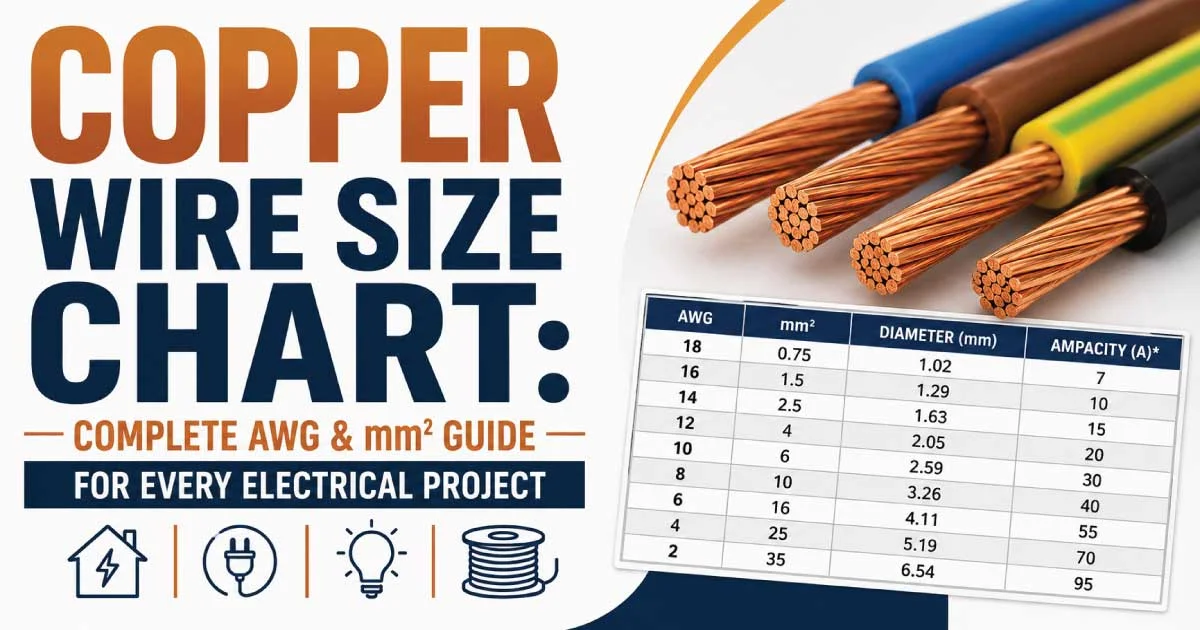
Copper wire is one of the most widely used electrical conductors because of its excellent conductivity, durability, and flexibility. Whether you’re installing residential wiring, automotive circuits, or industrial electrical systems, choosing the correct wire size is essential for safety and efficiency.
A copper wire size chart helps electricians, engineers, and DIY enthusiasts determine the appropriate wire gauge for different applications based on current capacity, voltage, and distance.
In this this guide, you will learn the basics of copper wire sizing, understand wire gauge systems, discover why wire size matters, and explore standard copper wire size charts for common electrical installations.
What Is a Copper Wire Size Chart?
A copper wire size chart is a reference table that lists various wire gauges along with their diameters, cross-sectional areas, ampacity ratings, and recommended applications. It simplifies the process of selecting the correct wire for electrical installations while ensuring safe current flow and preventing overheating or voltage loss in residential, commercial, and industrial environments.
Why Electricians Use Copper Wire Size Charts
Electrical professionals rely on wire size charts to minimize installation errors and improve system performance. Using the correct wire size ensures efficient power transmission while complying with electrical safety standards.
Benefits include:
- Prevents overheating
- Reduces voltage drop
- Improves electrical efficiency
- Meets electrical code requirements
- Extends wire lifespan
- Protects appliances and equipment
- Reduces fire hazards
Understanding Copper Wire Gauge Systems
Copper wires are measured using standardized gauge systems. The most common is the American Wire Gauge (AWG), while many countries also use square millimeters (mm²). As the AWG number decreases, the wire becomes thicker and capable of carrying more electrical current. Understanding these measurement systems helps users accurately choose wires for different electrical loads and installation environments.
American Wire Gauge (AWG)
The American Wire Gauge system assigns numerical values to wire sizes. Smaller AWG numbers represent larger wire diameters, allowing them to carry higher electrical currents with lower resistance.
Common AWG sizes include:
- 18 AWG
- 16 AWG
- 14 AWG
- 12 AWG
- 10 AWG
- 8 AWG
- 6 AWG
- 4 AWG
- 2 AWG
- 1/0 AWG
Metric Wire Size (mm²)
Many countries outside North America use metric wire sizing measured in square millimeters. Instead of gauge numbers, wires are classified by their cross-sectional area, making calculations easier for engineering and electrical design.
Popular metric sizes include:
- 0.75 mm²
- 1.0 mm²
- 1.5 mm²
- 2.5 mm²
- 4 mm²
- 6 mm²
- 10 mm²
- 16 mm²
- 25 mm²
- 35 mm²
Why Choosing the Correct Copper Wire Size Matters
Selecting the wrong copper wire size can lead to serious electrical problems. Undersized wires generate excessive heat, waste energy, and increase the risk of electrical fires. Oversized wires, while generally safer, can significantly increase project costs without providing additional benefits for low-current circuits.
Problems Caused by Undersized Copper Wire
Using wire that’s too small for the electrical load creates resistance, resulting in higher temperatures and reduced system performance. Over time, insulation may deteriorate, increasing safety risks.
Common issues include:
- Wire overheating
- Frequent breaker trips
- Voltage drop
- Appliance damage
- Reduced equipment efficiency
- Fire hazards
- Shortened wire lifespan
Benefits of Proper Wire Sizing
Correct wire sizing improves electrical reliability while maximizing energy efficiency. It also helps ensure compliance with national electrical codes and manufacturer recommendations.
Advantages include:
- Stable voltage delivery
- Better power efficiency
- Longer equipment life
- Lower maintenance costs
- Improved electrical safety
- Reduced heat generation
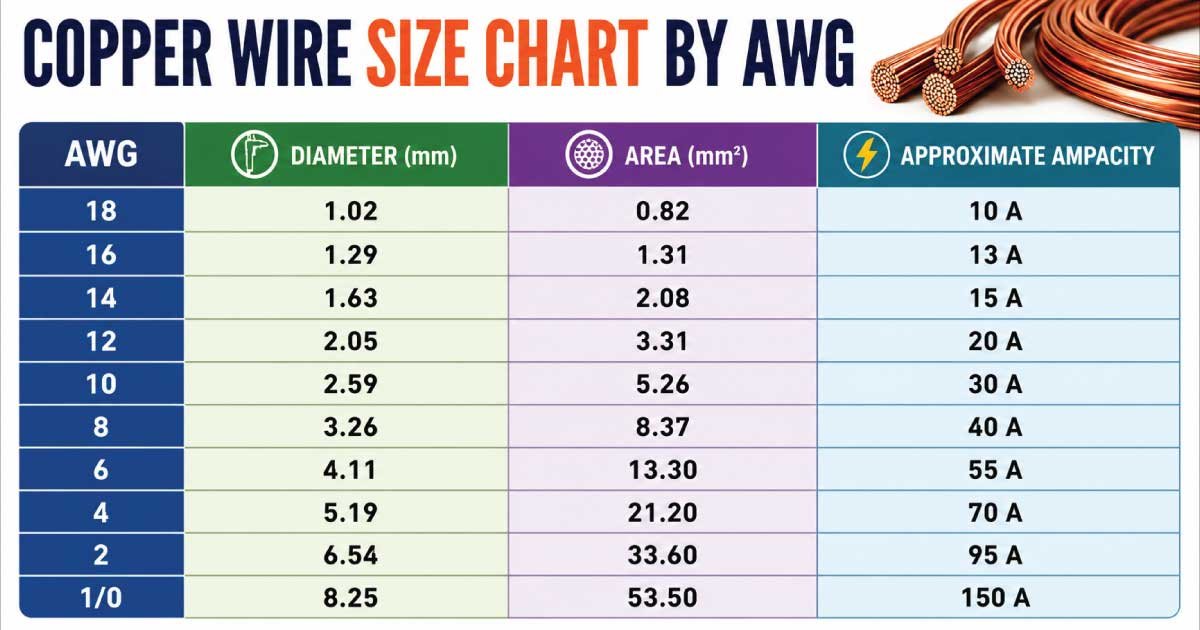
Copper Wire Size Chart by AWG
The following chart provides approximate wire diameters, cross-sectional areas, and typical ampacity ratings for common copper wire sizes. Actual ampacity depends on insulation type, installation conditions, and local electrical codes.
| AWG | Diameter (mm) | Area (mm²) | Approximate Ampacity |
|---|---|---|---|
| 18 | 1.02 | 0.82 | 10 A |
| 16 | 1.29 | 1.31 | 13 A |
| 14 | 1.63 | 2.08 | 15 A |
| 12 | 2.05 | 3.31 | 20 A |
| 10 | 2.59 | 5.26 | 30 A |
| 8 | 3.26 | 8.37 | 40 A |
| 6 | 4.11 | 13.30 | 55 A |
| 4 | 5.19 | 21.20 | 70 A |
| 2 | 6.54 | 33.60 | 95 A |
| 1/0 | 8.25 | 53.50 | 150 A |
Copper Wire Size Chart PDF
This copper wire size chart compares common AWG sizes with their diameter, cross-sectional area, and approximate ampacity. It provides a quick reference for selecting the right copper wire for electrical installations, helping users balance current capacity, efficiency, and safety across residential, commercial, and light industrial applications.
Copper Wire Size Chart in Square Millimeters
Metric wire sizes are widely used across Europe, Asia, Australia, and many other regions. The chart below provides common wire sizes and their typical current-carrying capacities under standard installation conditions.
| Wire Size (mm²) | Approximate Current Capacity |
|---|---|
| 0.75 | 6 A |
| 1.0 | 10 A |
| 1.5 | 16 A |
| 2.5 | 20–25 A |
| 4 | 32 A |
| 6 | 40 A |
| 10 | 63 A |
| 16 | 85 A |
| 25 | 110 A |
| 35 | 140 A |
Factors That Influence Copper Wire Size Selection
Several variables determine the appropriate wire size beyond current requirements alone. Installation environment, cable length, insulation material, temperature, and voltage all affect wire performance. Considering these factors helps ensure reliable operation while maintaining compliance with electrical regulations and minimizing long-term maintenance costs.
Current Load
The electrical current carried by the wire is the primary consideration. Higher current requires thicker copper conductors to safely handle the electrical load without overheating.
Important considerations include:
- Continuous load
- Peak load
- Starting current
- Equipment type
- Safety margin
Voltage Drop
Voltage naturally decreases as electricity travels through a conductor. Longer wire runs require larger conductors to minimize voltage drop and maintain proper equipment operation.
Factors affecting voltage drop include:
- Wire length
- Current
- Wire material
- Wire diameter
- Supply voltage
Ambient Temperature
Higher temperatures reduce a wire’s ability to dissipate heat effectively. Electrical codes often require larger wire sizes when cables operate in hot environments or enclosed conduits.
Environmental considerations include:
- Outdoor installations
- Attics
- Industrial plants
- Electrical panels
- Underground conduits
Common Residential Copper Wire Sizes
Residential electrical systems use several standard wire sizes depending on circuit requirements. Lighting circuits generally require smaller conductors, while heavy appliances and HVAC equipment need thicker copper wires to safely carry higher electrical loads.
Typical Household Wire Sizes
Here are some of the most commonly installed residential copper wire sizes:
- 14 AWG – Lighting circuits (15 amps)
- 12 AWG – General outlets (20 amps)
- 10 AWG – Water heaters and dryers
- 8 AWG – Electric ranges
- 6 AWG – Large HVAC systems
- 4 AWG – Main feeder circuits
How to Read a Copper Wire Size Chart
Reading a copper wire size chart involves identifying the required current capacity, selecting the appropriate gauge or metric size, and verifying voltage drop limitations. Always consider insulation type, installation method, ambient temperature, and applicable electrical codes before making a final wire selection for any project.