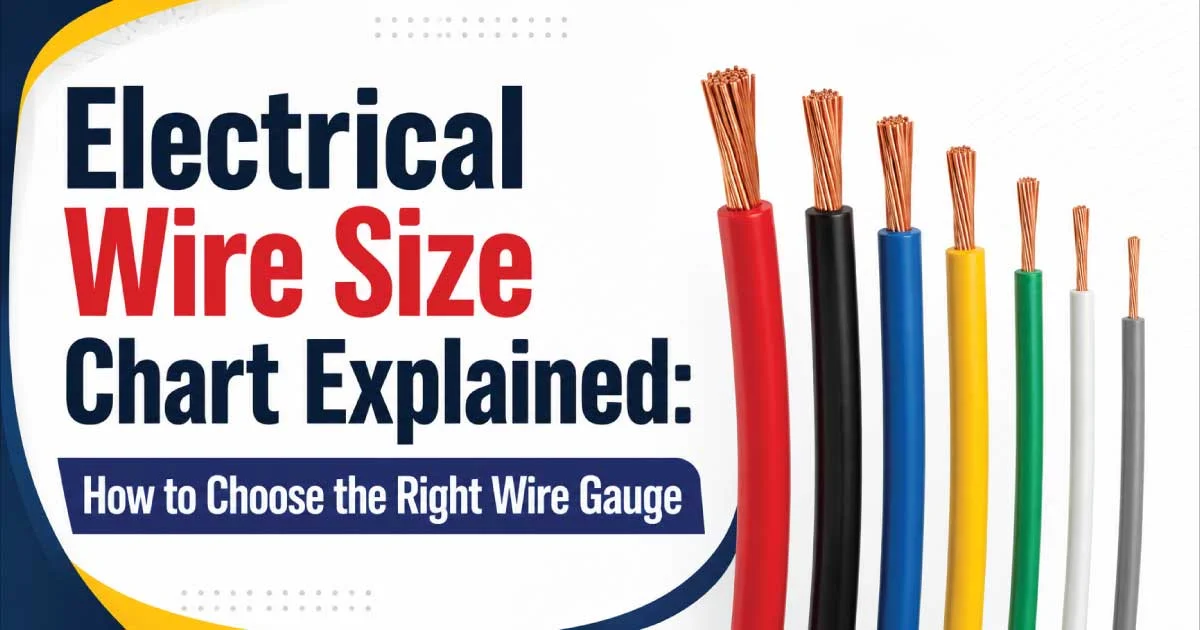
Electricity powers nearly every aspect of modern life, making electrical wiring one of the most important components of any residential, commercial, or industrial installation. Choosing the correct wire size is not simply about connecting devices, it directly impacts safety, efficiency, and long-term reliability.
An electrical wire size chart helps electricians, contractors, and homeowners determine the appropriate wire gauge based on the current load, voltage, distance, and application. Using the wrong wire size can lead to overheating, voltage drop, equipment failure, and even electrical fires.
This comprehensive guide explains everything you need to know about electrical wire size charts, wire gauges, ampacity ratings, and the factors influencing wire selection.
What Is an Electrical Wire Size Chart?
An electrical wire size chart is a reference guide that displays the relationship between wire gauge, current-carrying capacity, resistance, and recommended applications. It allows users to select the proper wire thickness for electrical circuits, ensuring safe operation while minimizing voltage loss and heat buildup in residential, commercial, and industrial electrical systems.
Why Choosing the Correct Wire Size Matters
Selecting the proper wire size is essential because undersized wires generate excessive heat when carrying high current, while oversized wires unnecessarily increase project costs. Correct wire sizing improves electrical efficiency, extends equipment lifespan, reduces power losses, and ensures compliance with national electrical codes and local safety regulations.
Benefits of Correct Wire Sizing
- Improves electrical safety
- Prevents overheating
- Reduces voltage drop
- Increases energy efficiency
- Protects electrical equipment
- Extends wiring lifespan
- Meets electrical code requirements
- Reduces maintenance costs
Understanding Wire Gauge Systems
Wire gauge refers to the diameter of an electrical conductor. Different countries use different measurement systems, with the American Wire Gauge (AWG) system being the most common in North America. Larger AWG numbers indicate thinner wires, while smaller numbers represent thicker conductors capable of carrying higher electrical currents safely.
What Is American Wire Gauge (AWG)?
American Wire Gauge (AWG) is a standardized system used to measure wire diameter. The gauge number decreases as the wire diameter increases. For example, a 10 AWG wire is thicker than a 14 AWG wire and can safely carry significantly higher electrical current under similar operating conditions.
Common Electrical Wire Sizes
Residential and commercial wiring projects commonly use several standard wire sizes depending on the electrical load. Smaller wires serve lighting circuits, while larger conductors power heavy appliances, HVAC systems, industrial equipment, and main electrical service panels that require higher current capacities.
Frequently Used Wire Sizes
- 18 AWG
- 16 AWG
- 14 AWG
- 12 AWG
- 10 AWG
- 8 AWG
- 6 AWG
- 4 AWG
- 2 AWG
- 1/0 AWG
- 2/0 AWG
- 4/0 AWG
Electrical Wire Size Chart Explained
An electrical wire size chart combines conductor diameter, ampacity, resistance, and recommended breaker size into one easy reference. Electricians use these charts to match wire size with electrical loads while considering insulation type, installation method, ambient temperature, and allowable voltage drop for maximum safety.
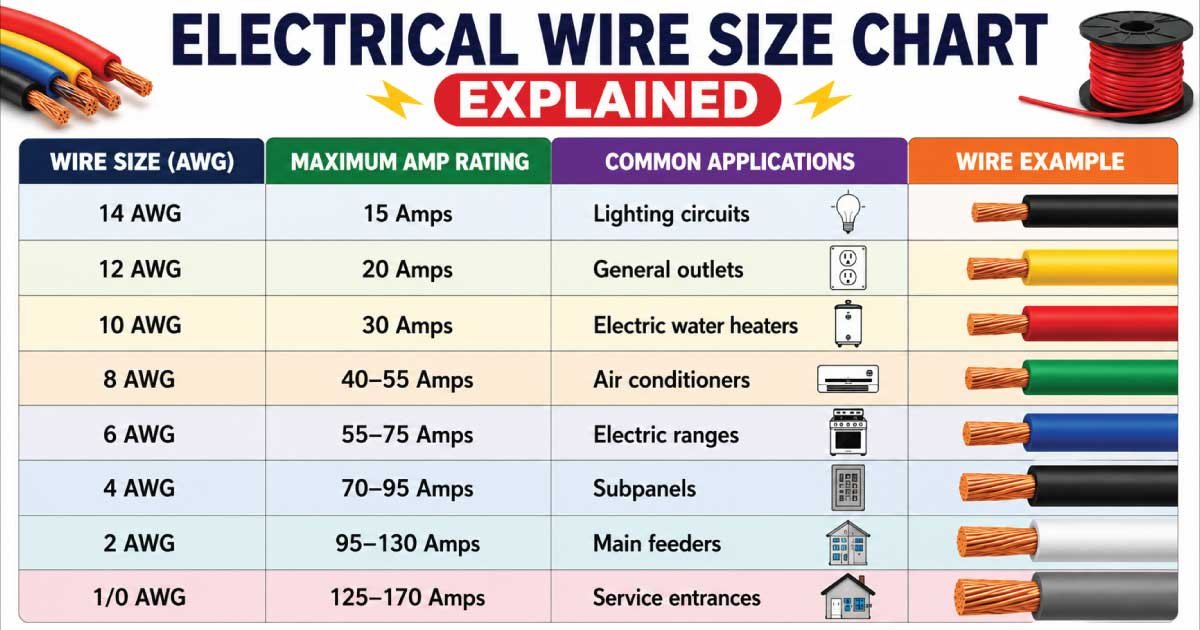
Electrical Wire Size Chart PDF
| Wire Size (AWG) | Maximum Amp Rating | Common Applications |
|---|---|---|
| 14 AWG | 15 Amps | Lighting circuits |
| 12 AWG | 20 Amps | General outlets |
| 10 AWG | 30 Amps | Electric water heaters |
| 8 AWG | 40–55 Amps | Air conditioners |
| 6 AWG | 55–75 Amps | Electric ranges |
| 4 AWG | 70–95 Amps | Subpanels |
| 2 AWG | 95–130 Amps | Main feeders |
| 1/0 AWG | 125–170 Amps | Service entrances |
Electrical Wire Size Chart PDF
Choosing the correct electrical wire size is essential for safety, efficiency, and reliable performance. The chart below provides common AWG wire sizes, their maximum amp ratings, and typical applications, making it easier to select the right wire for residential and light commercial electrical projects while helping reduce the risk of overheating and voltage drop.
Factors That Affect Wire Size Selection
Choosing the correct conductor size involves much more than current rating alone. Electricians evaluate several environmental and electrical conditions before selecting a wire size to ensure long-term safety, efficient power delivery, and compliance with recognized electrical installation standards and building regulations.
Key Factors Include
- Current load
- Voltage rating
- Circuit length
- Voltage drop
- Ambient temperature
- Conductor material
- Installation method
- Insulation type
- Local electrical codes
- Future load expansion
Current Carrying Capacity (Ampacity)
Ampacity represents the maximum electrical current a conductor can safely carry without exceeding its temperature rating. The ampacity depends on conductor size, insulation material, installation conditions, and surrounding temperature. Electrical codes specify safe ampacity values to prevent insulation damage and fire hazards.
Voltage Drop and Wire Size
Voltage drop occurs when electrical resistance causes voltage to decrease as electricity travels through conductors. Longer wire runs require larger conductors to minimize voltage loss. Maintaining acceptable voltage levels ensures efficient equipment operation, reduces overheating, and improves overall electrical system performance and reliability.
Copper vs Aluminum Electrical Wires
Copper and aluminum are the two most common conductor materials used in electrical installations. Copper offers better conductivity, flexibility, and corrosion resistance, while aluminum provides a lighter and more affordable alternative for larger electrical distribution systems requiring high-capacity conductors.
Copper Wire Advantages
- Higher conductivity
- Better flexibility
- Longer lifespan
- Better corrosion resistance
- Smaller conductor size
- Higher mechanical strength
Aluminum Wire Advantages
- Lower material cost
- Lightweight
- Easier transportation
- Suitable for large feeders
- Widely used in utility systems
Residential Wire Size Applications
Residential electrical systems use different wire sizes depending on the appliance or circuit being installed. Lighting requires smaller conductors, while kitchens, HVAC systems, dryers, ovens, and electric vehicle chargers demand significantly larger wires capable of safely carrying increased electrical loads.
Typical Residential Applications
- Lighting circuits
- Wall outlets
- Kitchen receptacles
- Garbage disposals
- Water heaters
- Electric dryers
- Electric ovens
- Air conditioners
- Heat pumps
- EV chargers
Commercial Electrical Wire Requirements
Commercial buildings often require larger conductors because they power numerous lighting fixtures, office equipment, elevators, HVAC systems, and industrial machinery. Electrical engineers calculate conductor sizes carefully to accommodate continuous loads, future expansion, and compliance with commercial electrical safety standards.
Industrial Electrical Wiring Considerations
Industrial facilities present unique wiring challenges due to heavy machinery, motors, transformers, welding equipment, and continuous production operations. Proper conductor sizing minimizes downtime, prevents excessive heating, and supports reliable operation under demanding electrical conditions while maintaining workplace safety and code compliance.
Temperature Ratings and Wire Insulation
Electrical wire insulation includes temperature ratings indicating the maximum operating temperature the insulation can safely withstand. Higher-rated insulation allows conductors to carry greater current under certain conditions, but electrical code limitations and terminal ratings must always be considered during installation and equipment connections.
How Distance Affects Wire Size
Longer electrical circuits create additional resistance, increasing voltage drop and reducing equipment performance. Electricians often increase conductor size for long-distance installations to maintain recommended voltage levels, improve efficiency, and reduce unnecessary energy losses throughout the electrical distribution system.
Common Mistakes When Choosing Wire Size
Many electrical problems result from selecting conductors based solely on current ratings without considering voltage drop, installation conditions, or temperature correction factors. Avoiding these common mistakes ensures safer installations, better equipment performance, and fewer costly repairs throughout the system’s operational lifespan.
Mistakes to Avoid
- Ignoring voltage drop
- Using undersized wires
- Selecting incorrect breaker sizes
- Overlooking ambient temperature
- Mixing incompatible conductor materials
- Ignoring electrical code requirements
- Forgetting future electrical expansion