Cable Tray Size Chart: Standard Dimensions and Sizing Guide
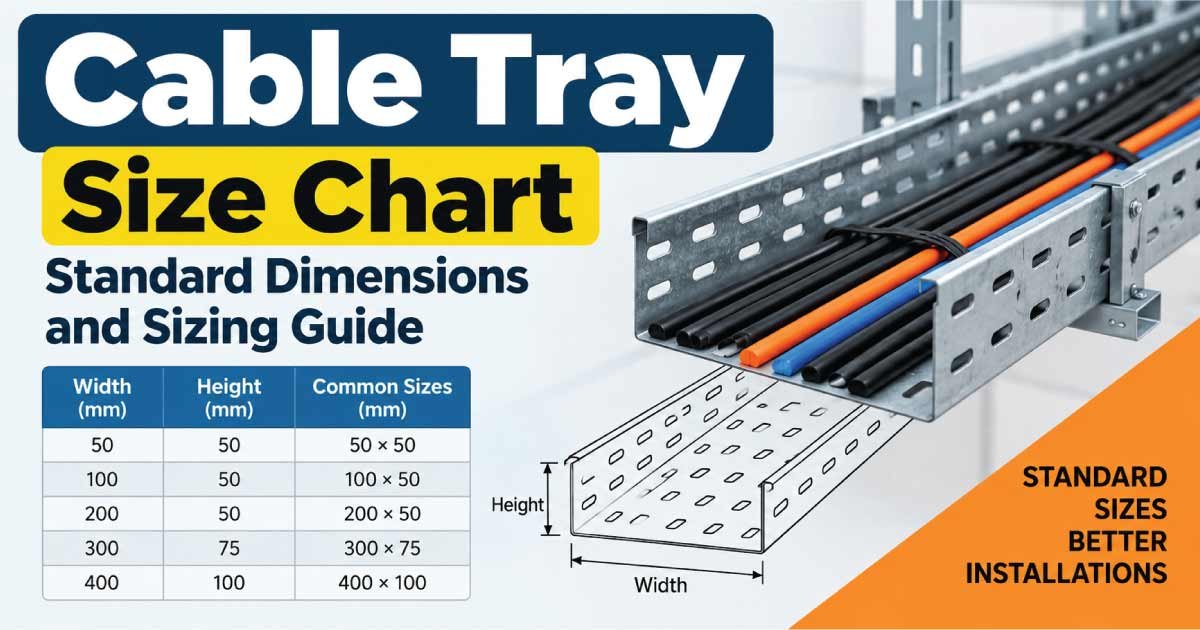
Cable Tray Size Chart

A cable tray provides a structured pathway for electrical power cables, control cables, instrumentation cables, communication cables, and other wiring systems. Selecting the correct tray size is important because the tray must provide enough space for the cables while maintaining suitable separation, support, ventilation, and accessibility. A cable tray size chart helps electricians, engineers, contractors, … Read more
Conduit Fill Size Chart: Standard Capacity and Sizing Guide

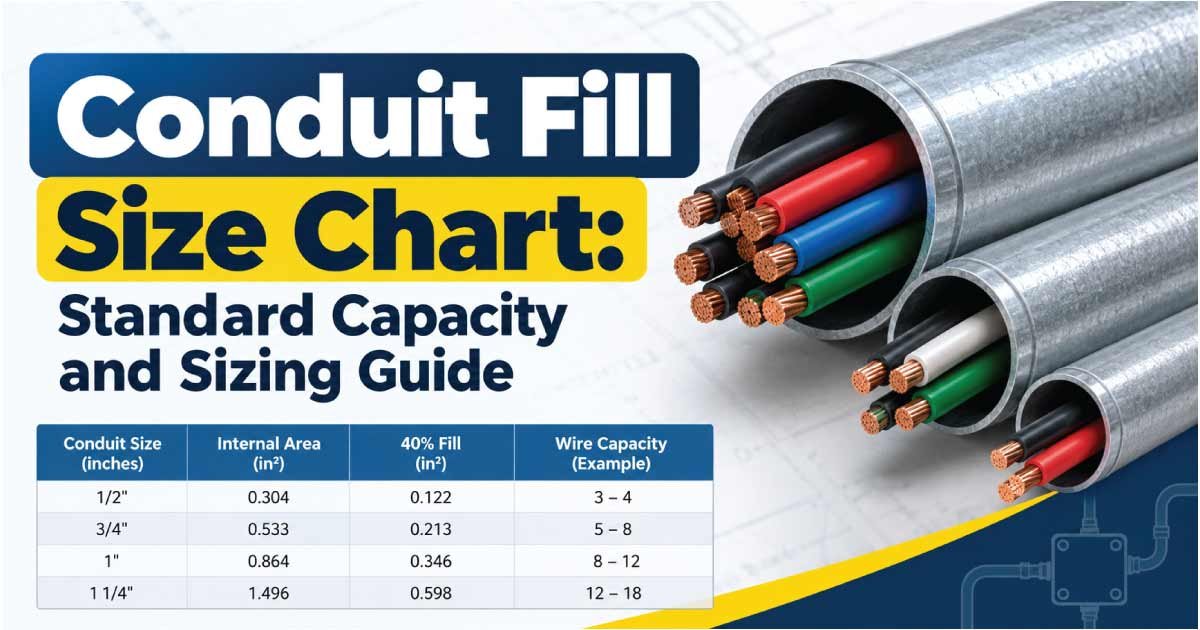
Conduit Fill Size Chart

Choosing the correct conduit size is important for safe, organized, and code-compliant electrical installations. A conduit fill size chart helps determine how many wires or cables can safely fit inside a conduit without overcrowding. Conduit fill depends on several factors, including the conduit trade size, conductor size, conductor insulation, number of wires, and conduit type. … Read more

RCBO Size Chart: Standard Ratings and Sizing Guide

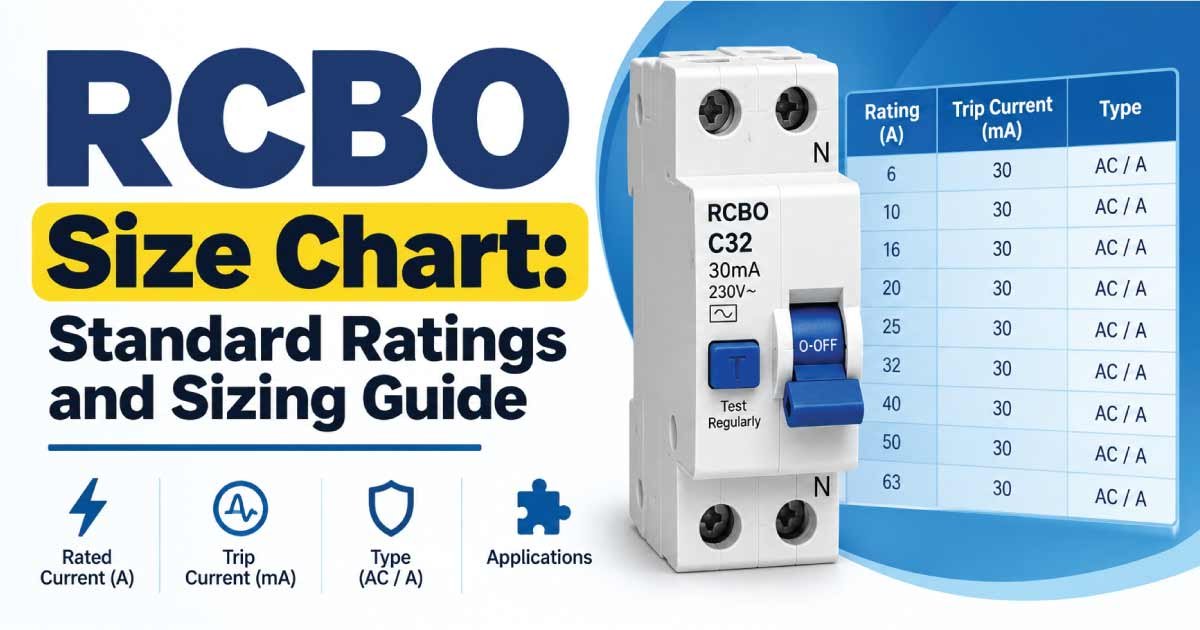
RCBO Size Chart

An RCBO size chart helps you choose the correct residual current circuit breaker with overcurrent protection for an electrical circuit. RCBOs combine the functions of an MCB and RCD, providing protection against overload, short circuits, and residual-current or earth-leakage faults. Common RCBO ratings include 6A, 10A, 16A, 20A, 25A, 32A, 40A, 50A, and 63A. However, … Read more

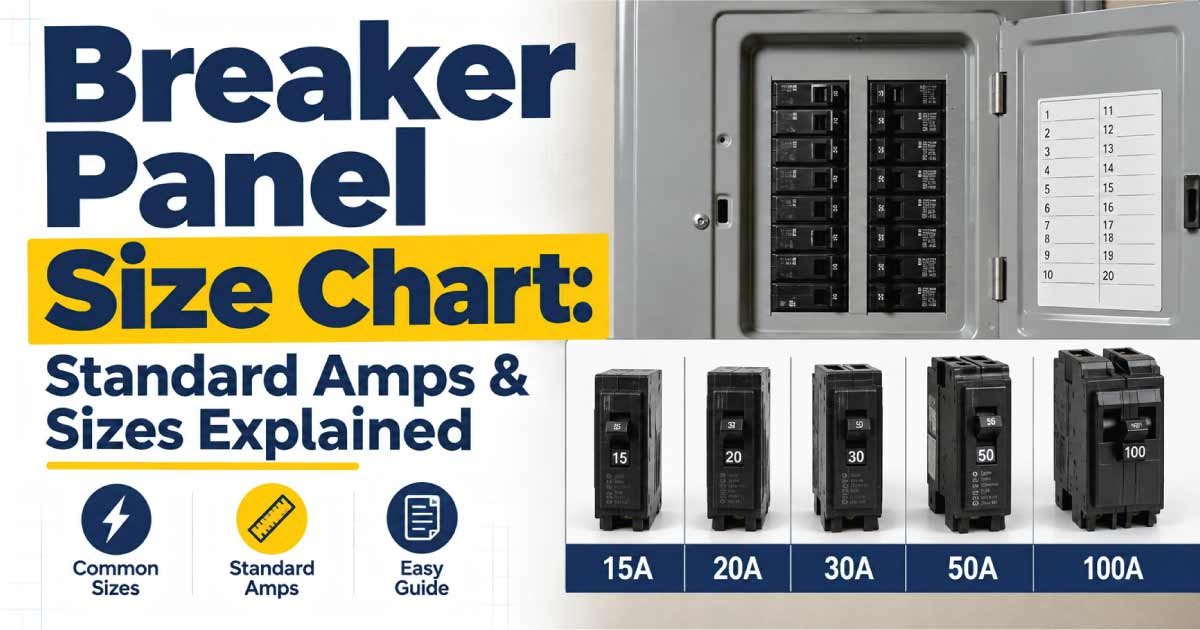
Breaker Panel Size Chart: Standard Amps & Sizes Explained

Breaker Panel Size Chart

A breaker panel size chart helps homeowners, electricians, builders, and DIY users understand the common electrical panel sizes used in residential and light commercial installations. Electrical panels are available in different amp ratings, circuit capacities, physical sizes, and breaker configurations. Common service and panel ratings include 60A, 100A, 125A, 150A, 200A, and 400A. However, choosing … Read more

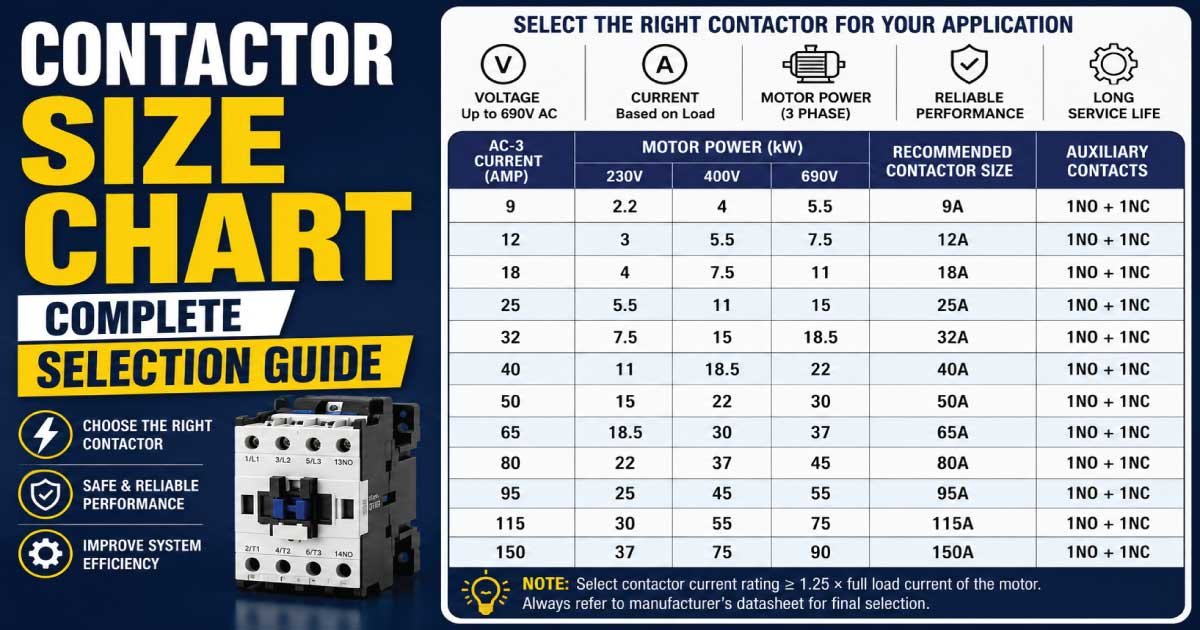
Contactor Size Chart: Complete Selection Guide

Contactor Size Chart

Selecting the correct contactor is essential for safely switching electric motors and other electrical loads. A contactor must be capable of handling the load current, voltage, motor horsepower, starting current, switching frequency, and application duty. For motor applications, choosing a contactor only by its ampere rating can lead to incorrect selection. The contactor’s utilization category, … Read more

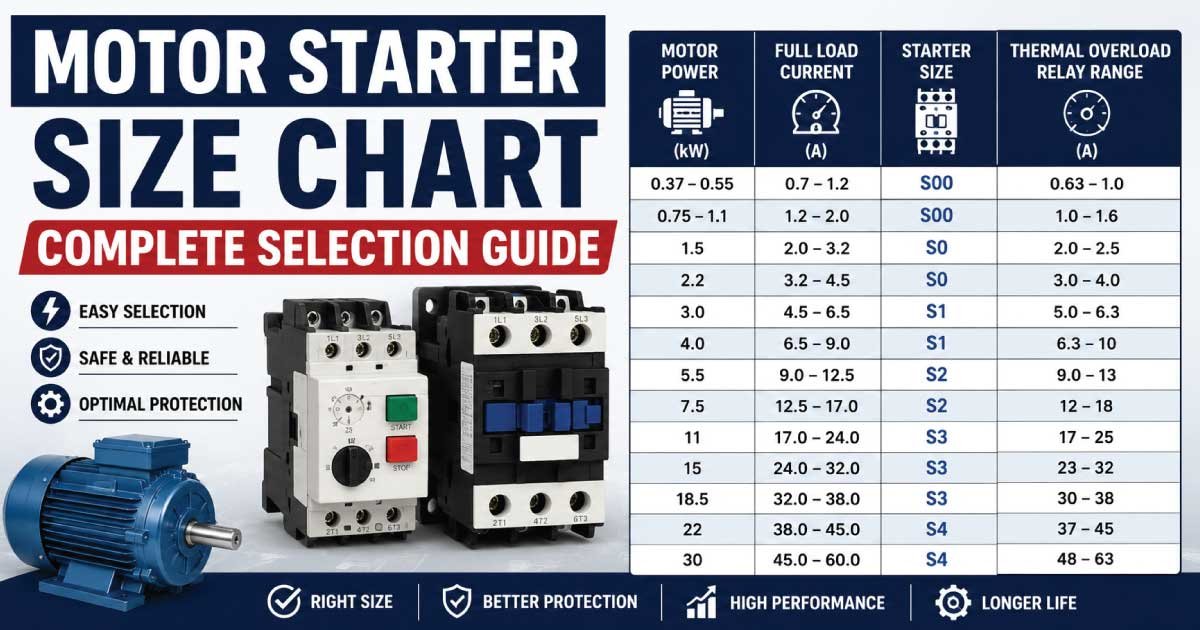
Motor Starter Size Chart: Complete Selection Guide

Motor Starter Size Chart

Choosing the correct motor starter is important for protecting an electric motor from overloads, excessive current, and difficult starting conditions. The starter must be matched to the motor’s horsepower, voltage, full-load current, phase, starting method, and application. A motor starter is not selected from horsepower alone. Two motors with the same horsepower can have different … Read more

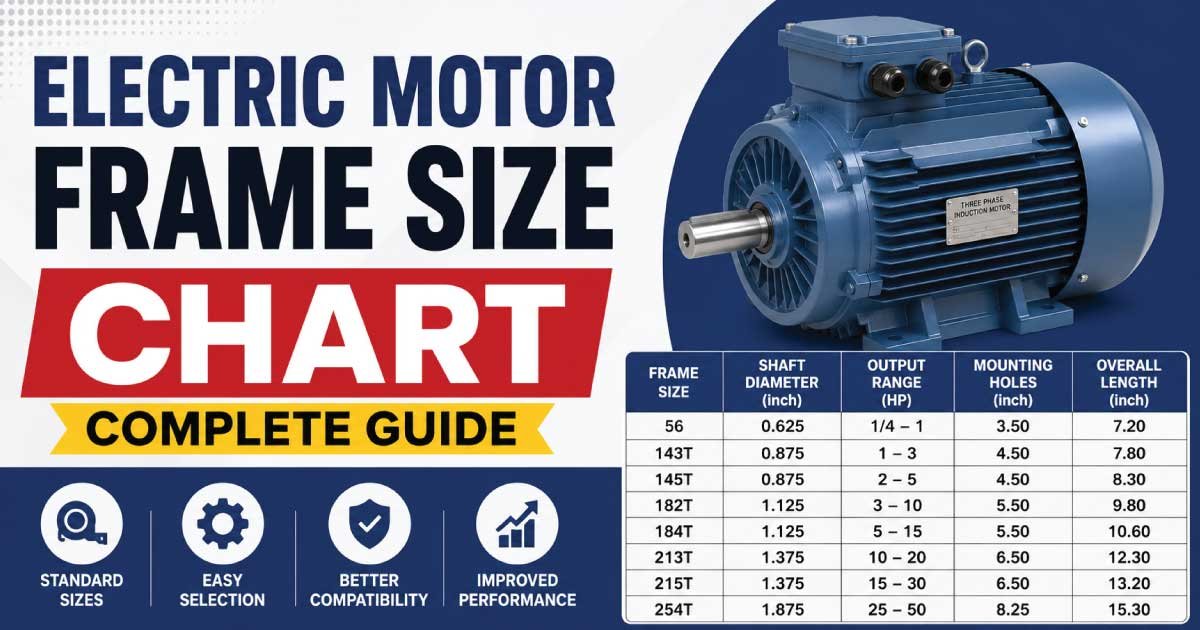
Electric Motor Frame Size Chart: Complete Guide

Electric Motor Frame Size Chart

Electric motor frame size is one of the most important specifications when selecting a replacement motor or designing a new motor installation. The frame size determines the motor’s physical mounting dimensions, shaft dimensions, mounting-hole arrangement, and overall compatibility with the driven equipment. Unlike horsepower or kilowatt ratings, motor frame size does not directly indicate the … Read more

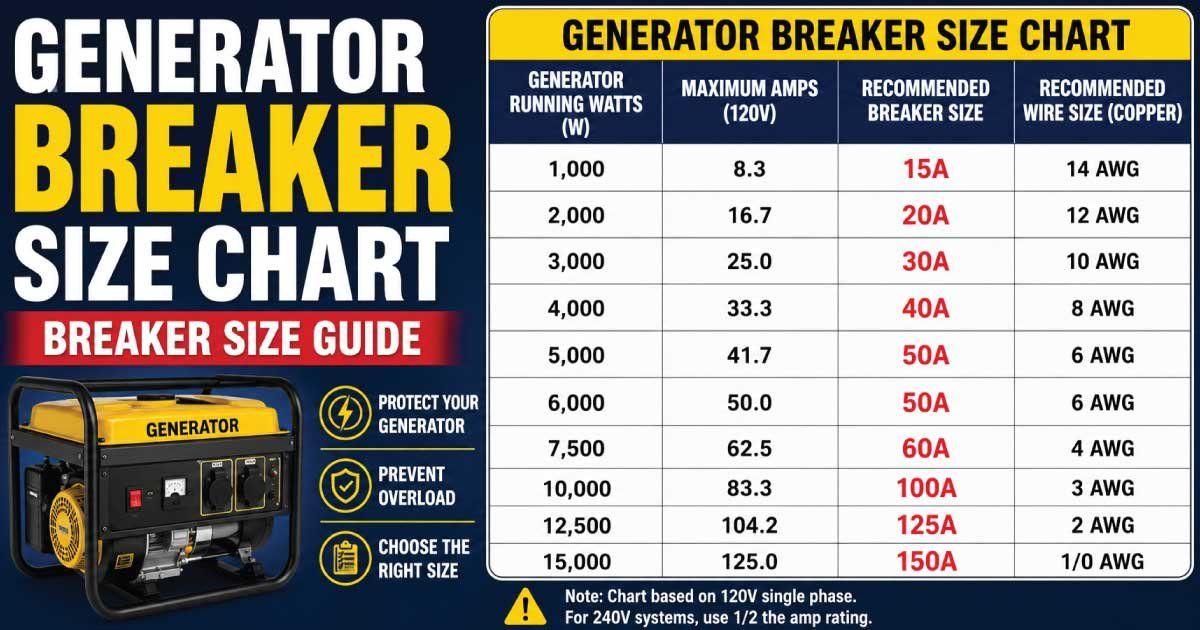
Generator Breaker Size Chart: Breaker Size Guide

Generator Breaker Size Chart

A generator breaker is an important protective device that helps protect the generator, connected conductors, and electrical distribution system from excessive current. Selecting the correct breaker requires more than simply matching the breaker to the generator’s kilowatt rating. The correct generator breaker size depends on the generator output, operating voltage, single-phase or three-phase configuration, power … Read more

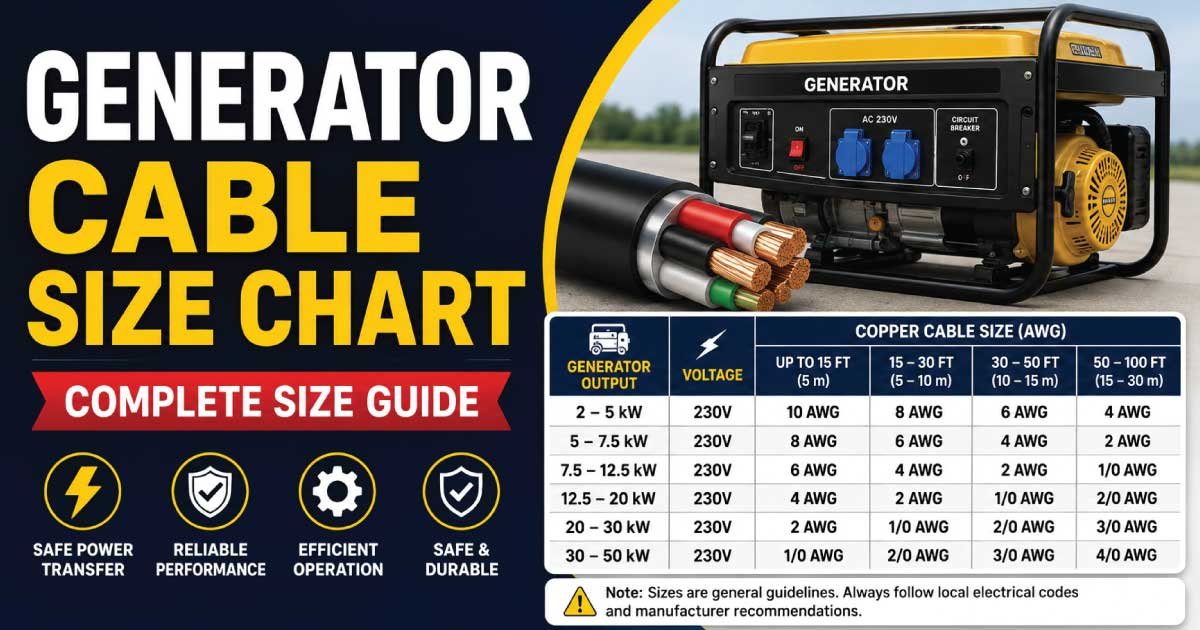
Generator Cable Size Chart: Complete Size Guide

Generator Cable Size Chart

A generator cable is responsible for carrying electrical power safely from a generator to a transfer switch, distribution panel, electrical load, or connected equipment. Selecting the correct cable size is essential because an undersized cable can overheat, cause excessive voltage drop, reduce generator performance, and create a serious safety hazard. Generator cable sizing depends on … Read more

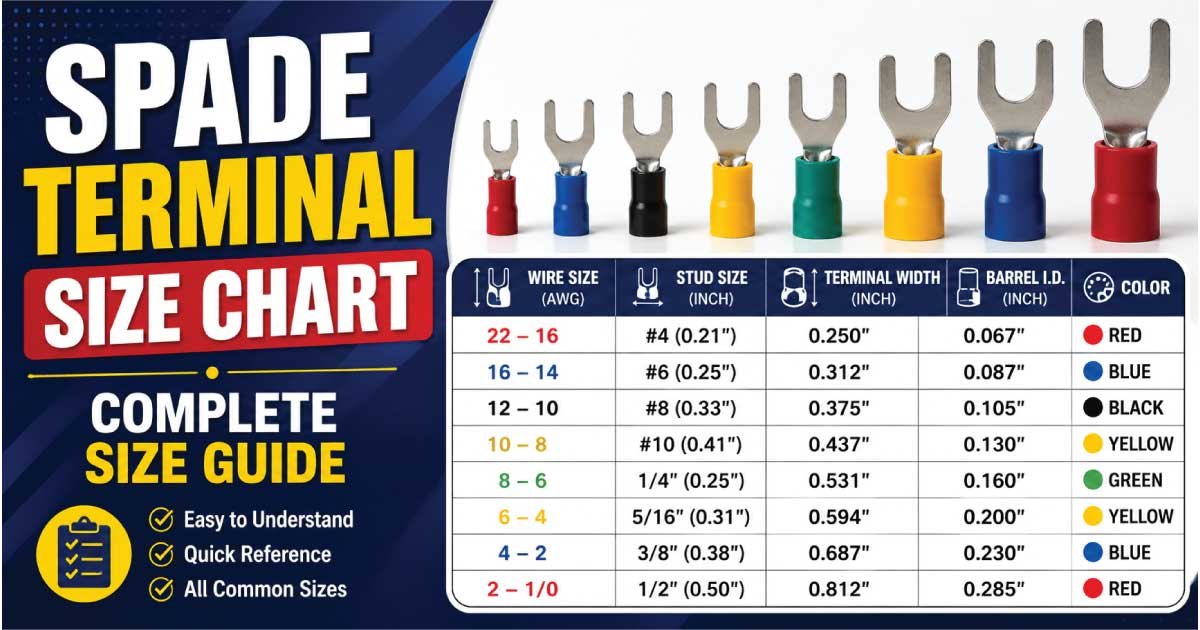
Spade Terminal Size Chart: Complete Size Guide

Spade Terminal Size Chart

Spade terminals, also called fork terminals or spade wire terminals, are electrical connectors designed to attach wires securely to screw or stud terminals. Their fork-shaped opening allows the terminal to be installed or removed without completely taking the screw or nut off the terminal post. They are commonly used in automotive wiring, control panels, appliances, … Read more