AC Cable Size Chart: Wire Sizes, Ampacity & Applications

AC Cable Size Chart

Choosing the correct cable for an alternating-current electrical system requires more than matching a wire to a voltage. AC cable size depends on conductor material, cross-sectional area, installation method, allowable ampacity, insulation temperature rating, ambient conditions, circuit length, and the connected load. This AC cable size chart provides a practical overview of common conductor sizes, … Read more

Distribution Board Size Chart: Standard Sizes and Ratings

Distribution Board Size Chart

A distribution board (DB) is a central part of many electrical installations, dividing incoming electrical power into separate circuits while providing protection and a practical means of control. Choosing the correct distribution board size involves more than selecting a box that physically fits the available space. The required distribution board size depends on the number … Read more

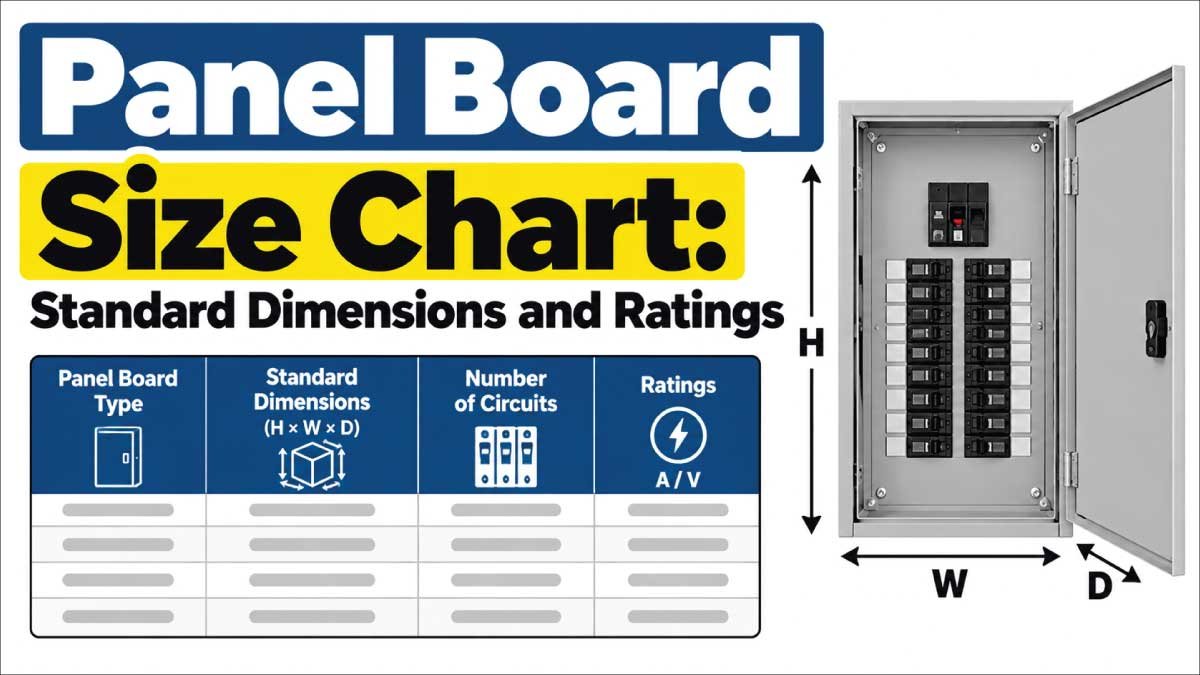
Panel Board Size Chart: Standard Dimensions and Ratings

Panel Board Size Chart

A panel board is a central part of many electrical distribution systems, and choosing the right size requires more than checking the enclosure dimensions. The board must provide enough space for circuit breakers, wiring, busbars, terminals, and future expansion while meeting the required voltage and current ratings. This panel board size chart explains common panel … Read more

Low Voltage Cable Size Chart: Sizes, Ampacity and Ratings

Low Voltage Cable Size Chart

Choosing the correct cable is essential for electrical safety, reliable power delivery, and long-term system performance. A low voltage cable size chart helps users compare conductor sizes, understand ampacity, and identify suitable cable options for different electrical applications. Low-voltage cables are commonly used for residential, commercial, industrial, control, lighting, distribution, and equipment connections. However, cable … Read more

Service Entrance Cable Size Chart: Complete Guide

Service Entrance Cable Size Chart

Selecting the correct service entrance cable is important because it connects an electrical service to a building’s main distribution equipment. The right service entrance cable size must provide sufficient current-carrying capacity while also meeting voltage, installation, temperature, and protection requirements. Service entrance cables are available in different conductor sizes, materials, insulation systems, and constructions. The … Read more

Medium Voltage Cable Size Chart: Complete Guide

Medium Voltage Cable Size Chart

Medium voltage cable sizing requires more than matching a conductor to a load current. The correct cable must satisfy ampacity, voltage rating, insulation level, installation method, voltage drop, short-circuit withstand, and environmental conditions. This medium voltage cable size chart explains common conductor sizes and shows how ampacity changes with installation conditions. It also covers copper … Read more

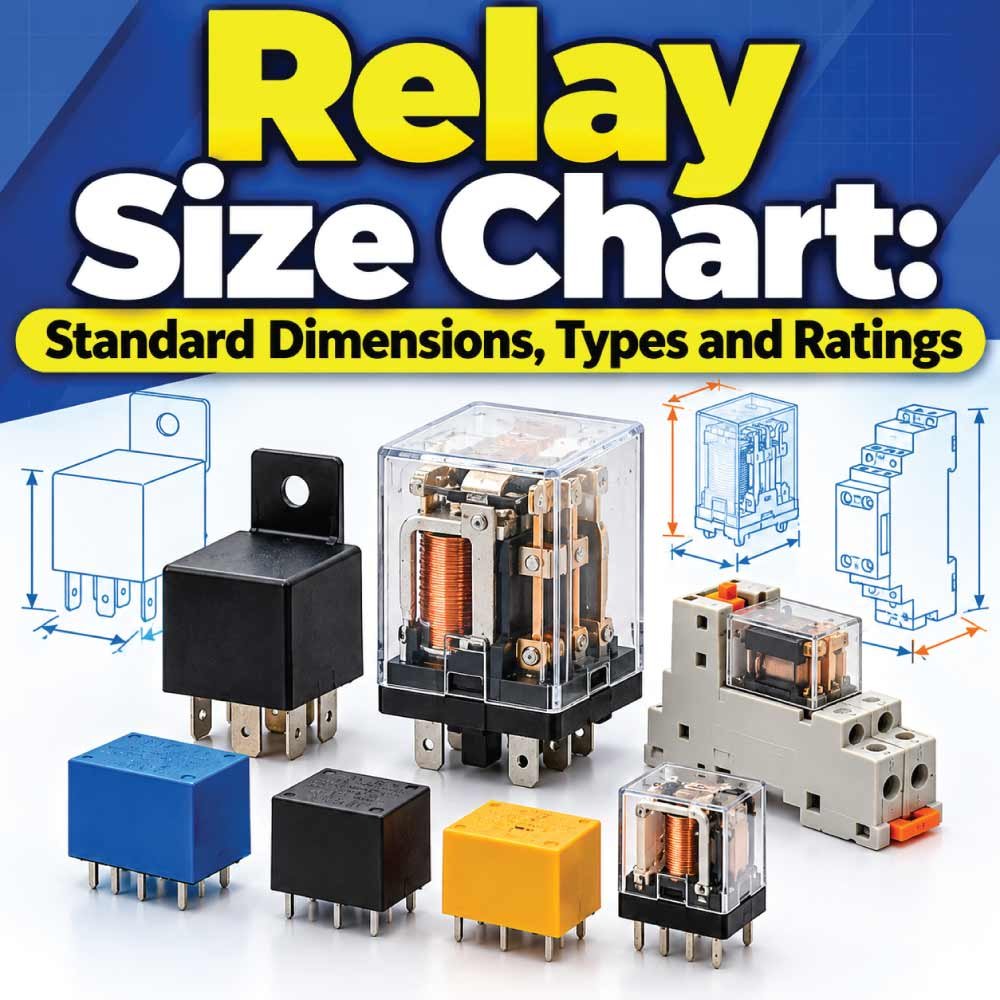
Relay Size Chart: Standard Dimensions, Types and Ratings

Relay Size Chart

Choosing the correct relay size involves more than matching the physical dimensions. A relay must fit the available space while also meeting the required coil voltage, contact rating, switching capacity, mounting style, and electrical load requirements. Because relay dimensions vary by design and manufacturer, there is no single universal relay size. This relay size chart … Read more

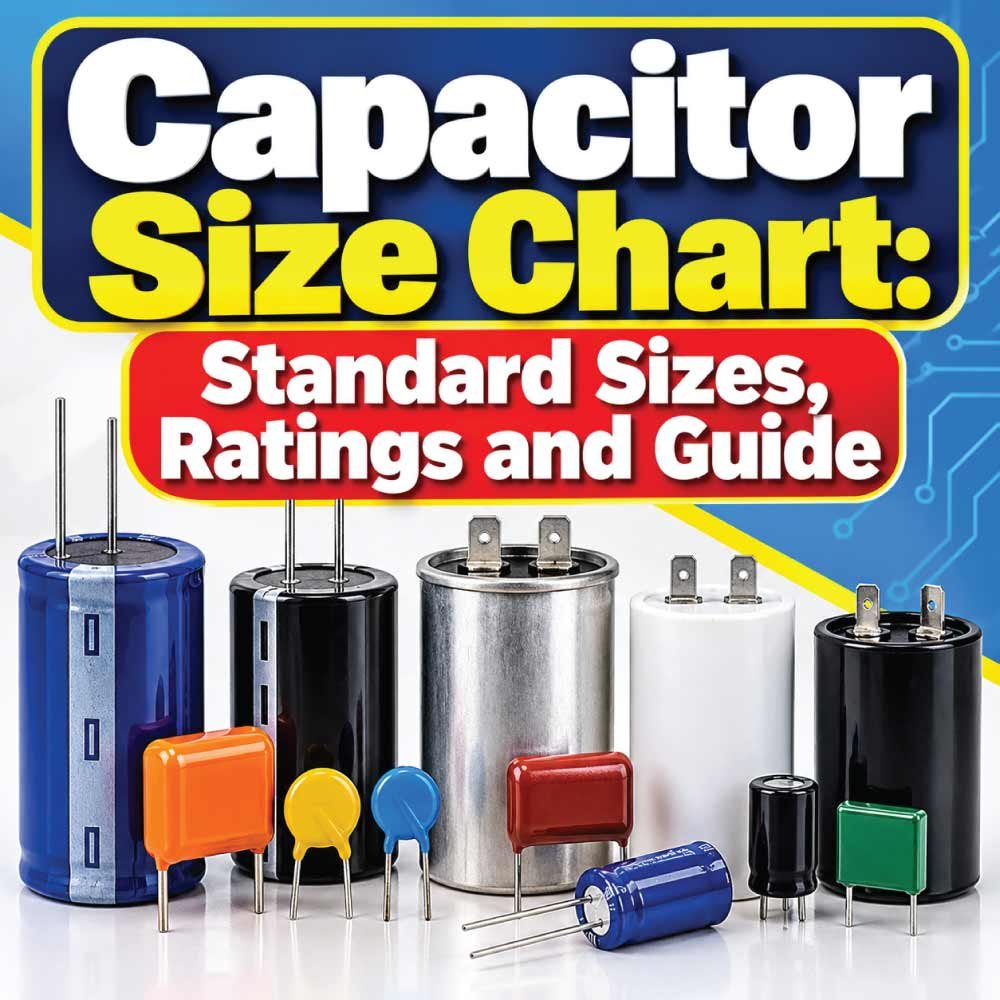
Capacitor Size Chart: Standard Sizes, Ratings and Guide

Capacitor Size Chart

Choosing the right capacitor requires more than matching a capacitance number. Capacitor size can refer to electrical capacitance, voltage rating, physical dimensions, package style, or lead spacing, depending on the application. A capacitor may have the correct capacitance but still be unsuitable because its voltage rating, temperature characteristics, polarity, or physical size does not match … Read more

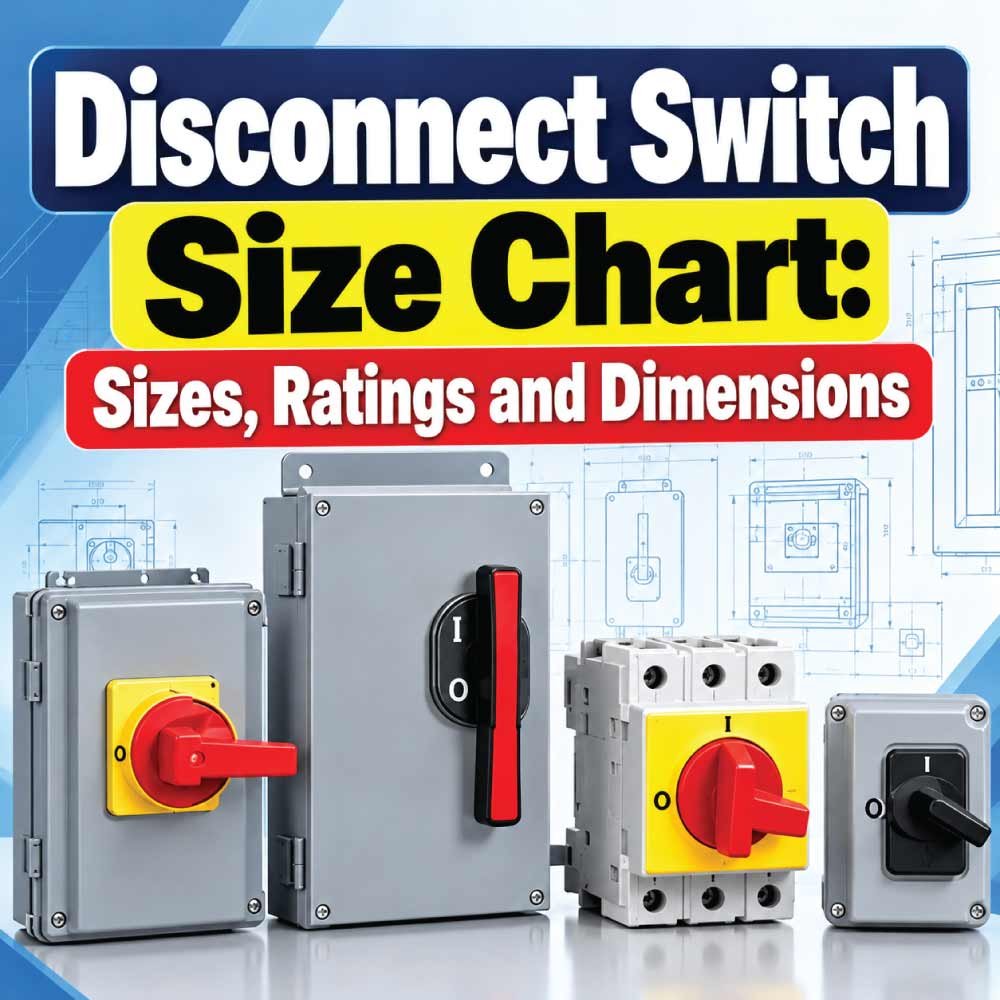
Disconnect Switch Size Chart: Sizes, Ratings and Dimensions

Disconnect Switch Size Chart

Choosing the correct disconnect switch involves more than matching an amp rating. The switch must also suit the circuit voltage, number of poles, enclosure environment, fuse arrangement, available mounting space, conductor size, and equipment load. A disconnect switch size chart makes it easier to compare common ratings and understand how physical dimensions can change as … Read more

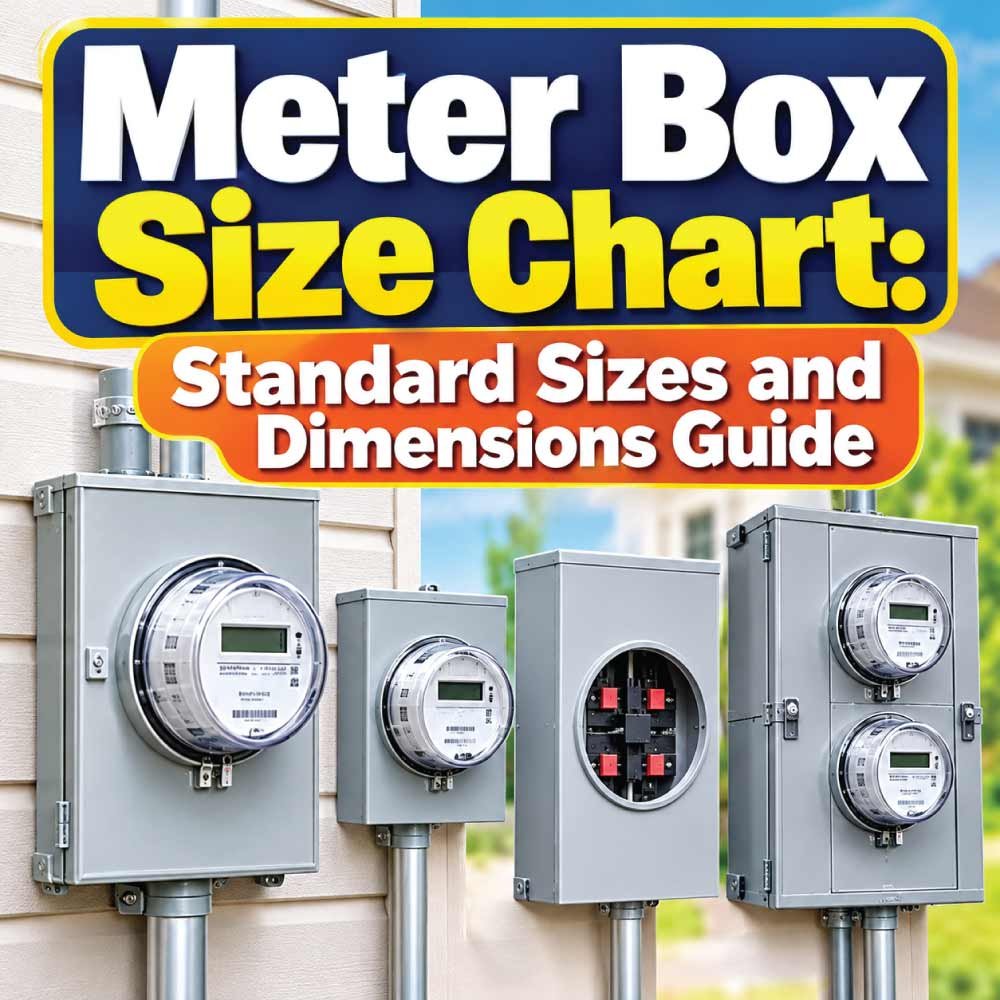
Meter Box Size Chart: Standard Sizes and Dimensions Guide

Meter Box Size Chart

A meter box protects an electrical utility meter and provides an organized enclosure for the meter connections, service conductors, and associated equipment. Choosing the correct enclosure size is important because the box must provide enough room for the meter, wiring, terminals, fittings, and required working clearances. This Meter Box Size Chart explains common meter box … Read more